
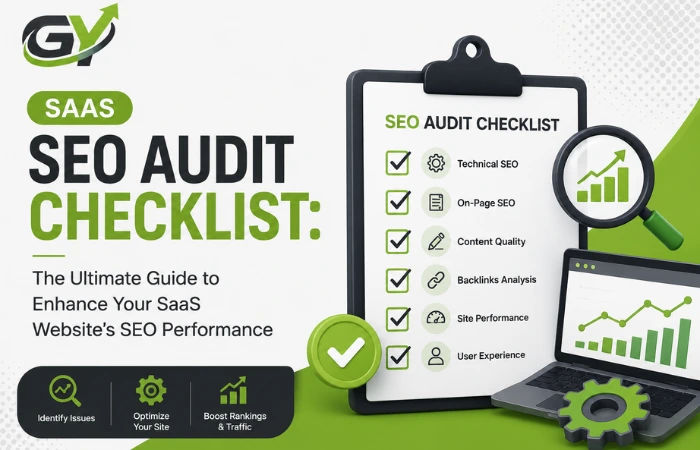
SaaS SEO Audit Checklist: Boost Rankings Fast
Introduction
SaaS businesses need to use SEO as one of their tools to generate quality leads and visitors organically. However, merely writing content won’t do as a tool for getting listed in search engines. SaaS SEO audit checklist is an inclusive list that will uncover the technical flaws, content deficiencies, and optimizations required. A recurring SaaS website SEO audit ensures that your website keeps performing fast, is user-friendly, and is search engine-friendly.
Why SaaS SEO Audits are Essential
SaaS platforms have more complexities than a regular website, and product pages, feature pages, blogs, knowledge base and more usually have a lot of pages. These can result in technical issues in the long run, which will decrease search visibility. A full audit can reveal these issues before they start to impact your rankings.
Periodic SEO audits also help in enhancing user experience, boosting website reputation, and optimizing every page to achieve overall marketing goals. Having a step-by-step audit process, businesses can optimize based on the data.
Technical SEO Checklist
The key to a successful SaaS web page is technical SEO. The search engines must crawl the pages, comprehend them, and be able to index them efficiently.
When you audit, be sure to look for the following:
- The loading speed of the website is another important aspect to keep in mind besides Core Web Vitals.
- Responsive Design for mobile devices on all platforms.
- Creation of an XML sitemap and robots.txt file.
- HTTPS security implementation
- An issue with a broken link or redirect.
- Google Search Console found the following errors when crawling the site
- How not to have duplicate content and how to use canonical tags.
These technical improvements are always a component of your SaaS SEO audit checklist because they can influence the way search engines crawl and how users interact with your site.
Evaluate Website Architecture
Your website’s structure allows users and search engines to easily locate the content. The web home page must be only a couple of clicks away from the homepage.
Arrange pages of products, prices, blogs, and documentation into logical sections. Internal linking should be done in a natural way and be available throughout the site. Clean URLs and uniform navigations will help usability and SEO performance.
Review on-page SEO Factors
One page should concentrate on one search intent. Meta title, Meta description, headings, and image ALT text must precisely describe the page content, and at the same time, you must put target keywords naturally.
Be sure that the title tags are not duplicated, or avoid missing meta description. The following structure should be followed on each page: H1 heading and then well-defined H2 and H3 headings. On-page optimization helps to boost click-through rates and helps users to comprehend content.
Analyze Content Quality
Content is still among the most highly valued SaaS website ranking factors. All articles, landing pages, and product descriptions should provide value to the user that covers valuable information and solves user problems.
Check out older blog posts and refresh with new statistics, examples, and formatting. Optimise thin content or link similar articles, and thus it creates topical relevance. Other parameters that can also be taken into account when performing a quality-oriented SaaS website SEO audit are readability, keyword relevance, and user engagement metrics.
Keyword Optimization Checklist
Targeting the right keywords should reflect user intent all along the customer journey.
Look over the following areas:
- Primary keyword placement
- Secondary keyword usage
- Long-tail keyword opportunities
- Keyword cannibalization
- Search intent alignment
- Content gaps that exist vs. competitors
- Featured snippet optimization
This way, you’ll enjoy a high level of visibility without a lot of competition for certain keywords on your pages.
Review The Internal Linking Strategy
Internal links are used to aid the search engines in crawling pages and to enhance the user experience. They also help to distribute the power around key areas of your site.
Make and embed the correct links in content, such as blog posts, pages, case studies, and documentation. Do not overlink (put anchor text that is not relevant to the content). There should be adequate interlinking between pages.
Review Backlink Profile
Links still have significant importance in the ranking of SaaS sites. Quality backlinks are an important factor for improving the ranking and domain authority of a website.
Identify the toxic links that may have a negative impact on the ranking and get rid of bad links wherever necessary. A high-quality link building process should be adopted over a quantity-based one.
Measure User Experience
User experience signals are becoming more and more relevant for search engines. Your website should have a level of user experience that is as smooth as possible, and there shouldn’t be too many frustrations.
Check page speed, navigation, readability, mobile experience, and placement of call to action. Clean up forms, make fewer unwanted pop-ups, and make vital information easily accessible for visitors. These all can boost the ranking and conversion rate in SEO.
Track Analytics and Performance
The SEO audit process always includes an analysis of performance. Information can be used to establish what optimization solutions are working.
Measure key performance indicators such as the number of indexed pages, average visit duration, conversion rate, bounce rate, keyword rankings, organic visits, and many more. Regular reporting may assist organizations in identifying trends for optimization purposes.
Download and get access to these useful SEO tools for your SaaS audit
Here are some useful tools that could assist you with making the audit easy.
Some of the useful tools are:
- Google Search Console
- Google Analytics
- Ahrefs
- SEMrush
- Screaming Frog SEO Spider
- PageSpeed Insights
- Google Lighthouse
These tools are highly efficient at technical analysis, keyword research, backlinks analysis, and website assessment.
Conclusion
For organic visibility and business growth, it is important to have a proper SaaS SEO audit checklist. Routine audits will be able to identify technical problems, improve content, increase the user experience, and improve search optimization before it becomes a problem. The companies will be able to compete with other firms and stay updated by conducting a thorough SaaS website SEO Audit for the company’s website. Through constant testing and tweaking of Technical SEO, content, keywords, backlinks, and analytics, the SaaS firms will be able to create an impressive online presence.
FAQs
1. How often should I be having a SaaS website audit?
A complete audit should be conducted on a 3-6 month basis, and important metrics should be tracked on a month-by-month basis.
2. Why is Technical SEO important for SaaS websites?
Technical SEO makes it easier for users to enjoy your website and helps search engines efficiently crawl, index and rank your site.
3. Which are the best tools to do SaaS SEO audits?
Some of the most widely used tools are Google Search Console, Google Analytics, Ahrefs, SEMrush, and Screaming Frog.
4. Is there any way that a SaaS SEO audit can boost conversions?
Yes. Improved site performance, navigation, and content can increase traffic and conversions.
5. Why is it important to have regular SEO audits for SaaS businesses?
Regularly checking website ranks, finding new opportunities, identifying technical issues, and optimising the website for changing search algorithms are all that frequent audits do.