
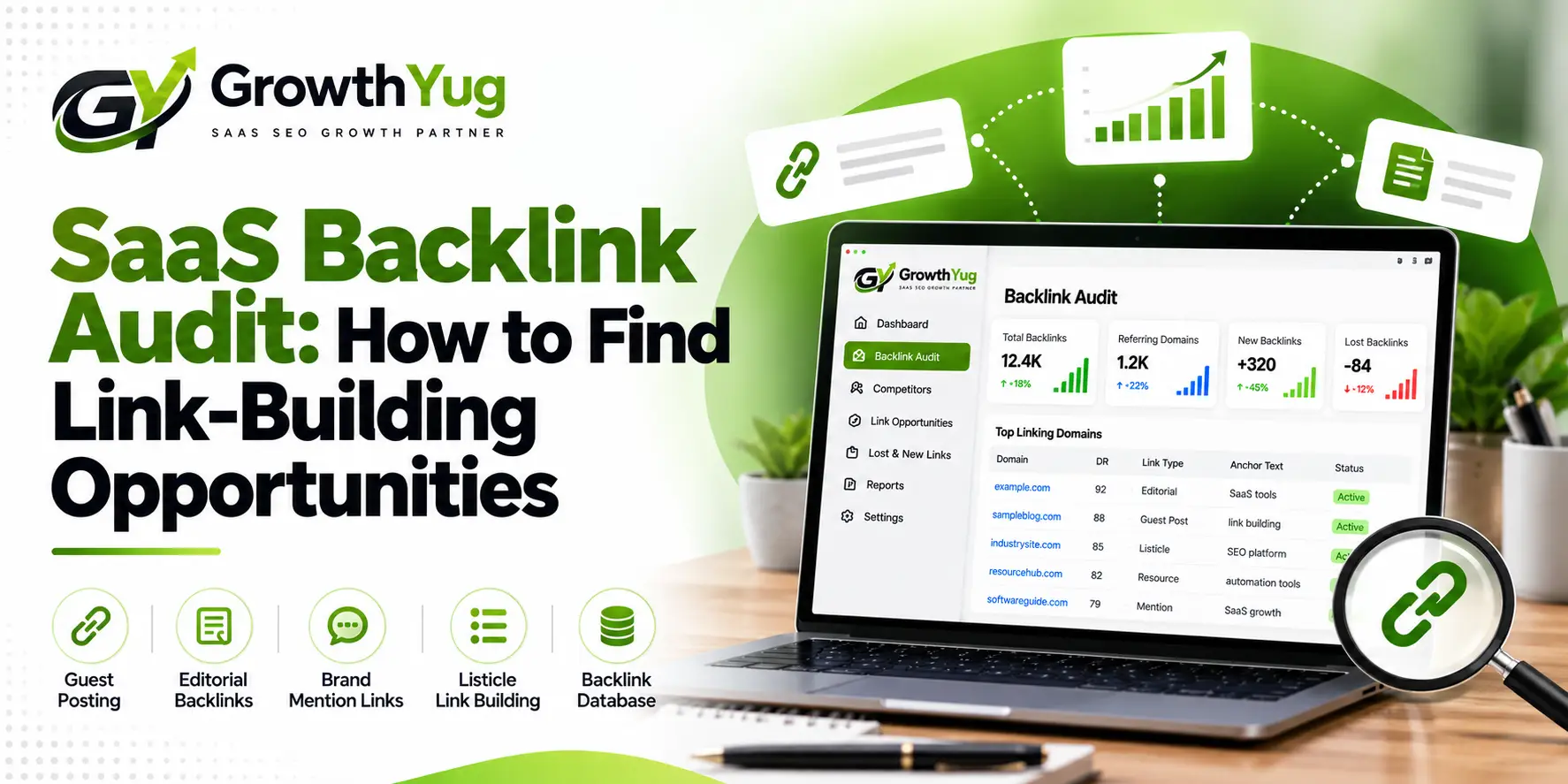
SaaS Backlink Audit: How to Find Link-Building Opportunities
Backlinks remain an important part of an effective SaaS SEO strategy. When relevant websites reference your software, research, or resources, they can help potential customers discover your brand and provide useful signals about your website’s relevance and authority.
However, not every backlink contributes the same value. Some links bring relevant referral traffic, while others come from unrelated websites, outdated pages, or sources that offer little benefit to your business.
A SaaS backlink audit helps you understand your existing backlink profile, identify potential risks, uncover competitor strategies, and discover new opportunities to earn relevant links.
For SaaS businesses operating in competitive markets, an audit is more than a routine SEO task. It provides a practical foundation for planning smarter outreach, improving link quality, and directing resources toward opportunities that support business growth.
In this guide, you’ll learn how to conduct a backlink audit, evaluate your existing links, find new link-building opportunities, and build a more effective SaaS link-building strategy.
What Is a SaaS Backlink Audit?
A SaaS backlink audit is the process of analysing the external websites linking to your software company’s website.
It examines the quality, relevance, distribution, and status of your backlinks to help you understand how other websites reference your brand and content.
A comprehensive audit typically evaluates:
- Referring domains and linking pages
- Website relevance and editorial quality
- Anchor text distribution
- Links pointing to important landing pages
- New, lost, and broken backlinks
- Competitor backlink profiles
- Potential link-building opportunities
- Suspicious or unnatural linking patterns
For example, a project management SaaS company may discover that its competitor receives links from productivity blogs, software comparison websites, industry publications, and integration partners.
These findings can help the company identify relevant publishers, develop useful content, and prioritise its own outreach opportunities.
The goal is not simply to collect more backlinks. It is to understand which links matter to your business and where additional opportunities exist.
Why Is a Backlink Audit Important for SaaS Companies?
SaaS companies often compete for commercial keywords, software comparisons, integration searches, and industry-specific topics. A structured backlink audit can help identify opportunities that may otherwise be overlooked.
1. Understand Your Existing Backlink Profile
Before investing in new links, understand what your website has already earned.
An audit helps identify which pages attract backlinks, which websites reference your brand, and whether important product or resource pages receive external links.
This information can help you make more informed decisions about future campaigns.
2. Find Competitor Link-Building Opportunities
Competitor analysis can reveal publications, resource pages, industry blogs, and software roundups that already link to businesses in your category.
These websites may be relevant prospects for your own outreach, provided your product or content offers genuine value to their audience.
3. Identify Lost Backlinks
Some websites remove old articles, update their content, change URLs, or delete links. Monitoring these changes helps you identify important lost placements.
Where appropriate, you can contact the publisher, restore a broken destination, or provide an updated resource that serves the same purpose.
4. Improve Link-Building Budget Allocation
A backlink audit can help you distinguish between promising opportunities and low-priority prospects.
Instead of spending your entire budget on a large volume of placements, you can prioritise relevant publishers, valuable content, and pages that support your marketing goals.
5. Identify Potential SEO Risks
An audit may reveal unusual anchor text patterns, irrelevant linking websites, or suspicious link acquisition activity.
However, a low-quality-looking backlink is not automatically harmful. Google generally handles many ordinary spammy links automatically, so avoid removing links or using the disavow tool based solely on third-party toxicity scores.
Investigate suspicious patterns in context and take action when there is a clear reason to do so.
How to Conduct a SaaS Backlink Audit Step by Step
Follow these steps to evaluate your current backlink profile and turn the findings into actionable opportunities.
Step 1: Collect Your Backlink Data
Start by gathering backlink data from an SEO tool and your available search performance reports.
You can use tools such as Ahrefs, Semrush, or Google Search Console to review links pointing to your website. Different tools may discover different links, so avoid relying on a single data source when a broader analysis is needed.
Export the available data and organise it into a spreadsheet.
Useful columns include:
- Referring domain
- Linking page URL
- Target page URL
- Anchor text
- Link status
- Website relevance
- Estimated organic visibility
- First-seen or last-seen date, where available
- Outreach priority
- Notes and next action
This creates a working backlink database that your team can use throughout the audit and subsequent outreach campaigns.
Step 2: Evaluate Referring Domains
A referring domain is a website that links to your website. Reviewing referring domains helps you understand the range of websites mentioning your brand.
Do not evaluate a domain using authority metrics alone. Instead, consider several factors together.
Topical relevance: Does the website cover your industry, audience, or related subjects?
Content quality: Does it publish useful, original content?
Organic visibility: Does the website appear to attract relevant search traffic?
Editorial standards: Does it maintain credible publishing practices?
Audience fit: Would visitors from this website have a reason to explore your product or resources?
For example, a SaaS analytics company may find more relevant opportunities in business intelligence publications than in unrelated general blogs, even if the latter have higher third-party authority scores.
The strongest prospects are those that make sense for your brand and the people you want to reach.
Step 3: Analyse Anchor Text Distribution
Anchor text is the clickable text used in a hyperlink. Reviewing anchor text helps you understand how other websites describe your product, brand, and content.
Common anchor text types include:
- Branded: Your company or product name
- URL-based: Your website address
- Descriptive: Text explaining the destination
- Generic: Phrases such as “read more”
- Commercial: Text containing product or service keywords
A natural backlink profile can contain a variety of anchor text types.
If you notice an unusual concentration of exact-match commercial anchors, investigate how those links were acquired and whether they reflect an intentional link scheme.
Do not try to force every backlink to use a target keyword. Anchor text should make sense in the context of the linking page and provide a clear description for readers.
Step 4: Review Your Most Important Landing Pages
Not all SaaS pages serve the same purpose.
Your website may contain homepage content, product pages, integration pages, pricing pages, comparison articles, case studies, and educational resources.
Identify which pages already receive relevant backlinks and which important pages may need more visibility.
For example, if your integration pages are central to your acquisition strategy but receive few relevant external links, you could explore partnerships, integration directories, technical tutorials, and relevant industry publications.
This does not mean every page needs a direct backlink. A well-planned internal linking structure can also help users and search engines discover important pages across your website.
Step 5: Find and Investigate Lost Backlinks
Use backlink monitoring tools to identify links that have disappeared or stopped pointing to your website.
Investigate why each important link was lost. The publisher may have deleted the page, changed its URL, removed an outdated reference, or updated the article.
Depending on the situation, possible actions include:
- Redirecting a discontinued URL to a genuinely relevant replacement
- Contacting a publisher about a broken destination
- Updating an outdated resource
- Reclaiming a relevant brand mention
- Replacing a broken resource with a more useful alternative
Focus on links with clear relevance and value. Recovering every lost backlink is neither necessary nor realistic.
How to Find New SaaS Link-Building Opportunities
Once your audit is complete, use the findings to build a targeted prospect list.
1. Analyse Competitor Backlink Profiles
Choose a small group of genuine competitors that target similar customers or search terms.
Review their referring domains and identify patterns in the types of content attracting links.
Look for:
- Industry publications covering competing products
- Software comparison articles
- Relevant resource pages
- Partner and integration websites
- Original research and data studies
- Expert interviews and industry contributions
Next, check whether each opportunity fits your own product and audience.
A competitor’s backlink is a research lead, not a guarantee that the same publisher will link to your business.
2. Find Unlinked Brand Mentions
Search for references to your company, product, or original research that do not include a link.
These mentions can be useful opportunities when linking to your website would help readers find the product or supporting information.
Prioritise reputable websites and contact their editors with a concise, relevant explanation of why the link would improve the page.
This approach forms the foundation of Brand Mention Links campaigns.
3. Research Resource Pages and Industry Directories
Some websites maintain collections of tools, educational resources, and recommended software.
Look for resources that are actively maintained and genuinely relevant to your product category.
For SaaS businesses, useful prospects may include industry associations, specialist software directories, integration partner pages, and educational resources.
Do not submit your website indiscriminately to every available directory. Prioritise credibility, relevance, and genuine user value.
4. Identify Broken-Link Opportunities
Broken-link building involves finding relevant pages that contain dead external links and suggesting a suitable replacement resource.
For example, a technology blog may link to an outdated guide about API security. If your SaaS company has a genuinely useful and up-to-date resource on the same subject, you can contact the publisher and suggest it as an alternative.
The replacement must serve the same purpose for readers. Avoid sending generic pitches that offer no meaningful benefit.
5. Turn Original Data Into Linkable Assets
Original research can create opportunities beyond traditional outreach.
SaaS businesses may publish anonymised product insights, industry surveys, benchmark reports, original experiments, or detailed case studies where they have reliable data and permission to use it.
Useful research gives journalists, bloggers, and industry experts a reason to reference your work.
This approach can support editorial coverage, relevant backlinks, and brand awareness at the same time.
How Guest Posting Can Support Your Backlink Strategy
Guest Posting is a content-led outreach method in which you contribute an article to a relevant external publication.
A backlink audit helps you identify websites that already publish content in your niche and may be appropriate prospects for future contributions.
For example, a marketing automation SaaS company could explore reputable marketing publications that cover lead generation, customer segmentation, and campaign analytics.
A successful guest posting strategy should prioritise:
- Relevant publications with a genuine audience
- Original, useful content
- Topics that fit the publisher’s editorial direction
- Natural and contextually appropriate links
- Transparent reporting of published placements
Avoid mass-produced guest posts and websites that exist primarily to sell links. The purpose should be to contribute something useful to the publication’s readers.
Finding Editorial Backlinks for SaaS Websites
Editorial Backlinks are links included by publishers because they consider the referenced resource relevant to their readers.
These links may come from original research, expert commentary, product comparisons, industry reporting, or useful educational resources.
To identify editorial opportunities during a backlink audit, examine the pages that link to competitors and understand why those links were included.
Ask yourself:
- Does the publisher reference original information?
- Is the linked resource genuinely useful?
- Could our company contribute relevant expertise?
- Do we have a stronger or more current resource?
- Would a reference to our product help the reader?
Build your outreach around these questions instead of sending generic requests for backlinks.
Editorial links are not guaranteed, and publishers should retain control over their editorial decisions.
Using Listicle Link Building to Discover Opportunities
Listicle Link Building focuses on articles such as “Best SaaS Tools,” software roundups, product comparisons, and industry-specific recommendation lists.
These pages can help potential customers discover solutions while providing relevant referral traffic opportunities.
During your audit, search for listicles that already mention competitors or cover your software category.
Evaluate each page for:
- Relevance to your product
- Quality of the recommendations
- Freshness and maintenance
- Audience and search intent
- Editorial transparency
- Suitability of your product for inclusion
A placement is most valuable when your product genuinely fits the list and offers a meaningful benefit to readers.
Avoid pursuing every listicle simply because a competitor appears in it. Focus on publications where your software belongs.
Best Backlink Monitoring Tools for SaaS Companies
The Best Backlink Monitoring Tools help you track new and lost links, investigate changes, and maintain an up-to-date view of your backlink profile.
Several tools can support this process.
Ahrefs: Useful for backlink discovery, referring-domain analysis, competitor research, and monitoring link changes.
Semrush: Supports backlink audits, competitor comparisons, and broader SEO analysis.
Majestic: Offers backlink-focused data and link profile analysis.
Google Search Console: Provides Google’s view of some links pointing to your website, along with organic search performance information.
When selecting a tool, compare data coverage, reporting options, historical information, alerts, export features, and pricing.
No single tool provides a complete view of every backlink on the web. For important decisions, combine available data with manual review.
Best SaaS SEO Tools for a Complete Audit
The Best SaaS SEO Tools help you evaluate more than backlinks. A complete audit should also consider technical SEO, content performance, internal links, and conversions.
Useful tools include:
Ahrefs: Backlink research, competitor analysis, and link opportunity discovery.
Semrush: Backlink analysis, keyword research, and competitive SEO research.
Google Search Console: Organic search visibility, clicks, impressions, and indexing information.
Google Analytics: Referral traffic, engagement, and conversion analysis.
Screaming Frog SEO Spider: Website crawling, broken-link checks, redirects, and internal-link analysis.
Choose tools based on your website size, campaign requirements, and budget. You do not need every paid platform to complete a useful audit.
The important part is turning the information into decisions: which links to investigate, which opportunities to pursue, and which pages deserve more attention.
How to Prioritise Backlink Opportunities
After collecting potential prospects, organise them by expected relevance and practical value.
A simple prioritisation framework can make the next steps clearer.
| Priority | Opportunity | Recommended action |
|---|---|---|
| High | Relevant unlinked brand mention | Contact the publisher with a useful link suggestion |
| High | Relevant competitor backlink from a credible publication | Research the topic and assess your own fit |
| High | Broken link with a suitable replacement resource | Offer the replacement where appropriate |
| Medium | Relevant software listicle | Review inclusion criteria and product fit |
| Medium | Industry blog accepting expert contributions | Pitch an original, relevant topic |
| Low | Unrelated website with weak editorial standards | Exclude from the prospect list |
This framework is a starting point, not a substitute for judgement. A prospect’s actual value depends on the page, audience, editorial context, and your business goals.
Common SaaS Backlink Audit Mistakes to Avoid
Even a detailed audit can lead to poor decisions if the data is interpreted incorrectly.
Focusing Only on Authority Scores
Third-party authority metrics can help compare prospects, but they do not measure every aspect of website quality. Consider relevance, audience, content, and editorial standards as well.
Treating Every Low-Quality Link as Harmful
Not every suspicious-looking backlink requires action. Investigate patterns and context before removing links or using Google’s disavow tool.
Ignoring Competitor Link Opportunities
Your competitors’ backlink profiles can reveal relevant publications, resources, and topics worth researching. Use these insights to develop your own strategy rather than copying links without evaluation.
Building Links Without a Clear Goal
Every campaign should have a reason for targeting particular pages or publications. Define whether the priority is referral traffic, brand exposure, editorial coverage, or support for an SEO strategy.
Measuring Success by Link Quantity Alone
A large number of links does not automatically mean a successful campaign. Evaluate relevance, placement quality, traffic, organic performance, and business outcomes together.
Turn Your SaaS Backlink Audit Into a Growth Strategy With GrowthYug
A backlink audit is most useful when it leads to clear, actionable next steps. Identifying relevant publishers, understanding competitor link profiles, reclaiming suitable mentions, and prioritising valuable content can help your SaaS business make better use of its SEO resources.
At GrowthYug, we help SaaS businesses explore link-building opportunities through targeted research, relevant outreach, and content-led strategies.
Our services include:
- Guest Posting: Reach relevant publishers through useful, original content.
- Editorial Backlinks: Explore opportunities to earn contextual links through relevant editorial outreach.
- Brand Mention Links: Identify brand references and suitable opportunities for relevant links.
- Listicle Link Building: Explore relevant software roundups, comparison pages, and industry lists.
The right strategy depends on your existing backlink profile, target pages, competitive landscape, and growth objectives. We focus on helping businesses identify suitable opportunities rather than treating every backlink as equally valuable.
Ready to uncover new backlink opportunities for your SaaS website?
Explore GrowthYug’s link-building services and take the next step toward a more focused SaaS SEO strategy.
FAQs About SaaS Backlink Audits
1. What is a SaaS backlink audit?
A SaaS backlink audit analyses the external websites linking to a software company’s website. It helps identify link quality, lost backlinks, competitor opportunities, and areas for future outreach.
2. How often should a SaaS company conduct a backlink audit?
A detailed audit can be performed periodically, such as every quarter, with more frequent monitoring for large websites or active campaigns. The appropriate schedule depends on backlink activity and business needs.
3. Which tools are best for a SaaS backlink audit?
Ahrefs and Semrush are useful for backlink research and competitor analysis. Google Search Console provides additional link and search performance information. The best choice depends on your data and reporting requirements.
4. How can I find competitor backlink opportunities?
Analyse relevant competitors’ referring domains and linking pages. Look for suitable industry publications, resource pages, software roundups, and content opportunities, then evaluate whether each prospect fits your own business.
5. What are Brand Mention Links?
Brand Mention Links are links associated with references to your company or product. An audit can help identify unlinked mentions that may be suitable for publisher outreach.
6. Are guest posting and editorial backlinks still useful for SaaS SEO?
They can support brand visibility, relevant referral traffic, and a natural link profile when pursued through useful content and credible publishers. Quality and relevance matter more than acquiring links in large quantities.
7. Should I disavow every toxic backlink?
No. Third-party toxicity scores do not automatically mean a link is harmful. Investigate the context and use Google’s disavow tool only when there is a clear justification, such as a substantial number of artificial links and a relevant manual action or other well-founded reason.
8. Can GrowthYug help find SaaS link-building opportunities?
GrowthYug offers Guest Posting, Editorial Backlinks, Brand Mention Links, and Listicle Link Building services. These services can support a focused link-building strategy based on your SaaS website and campaign objectives.