
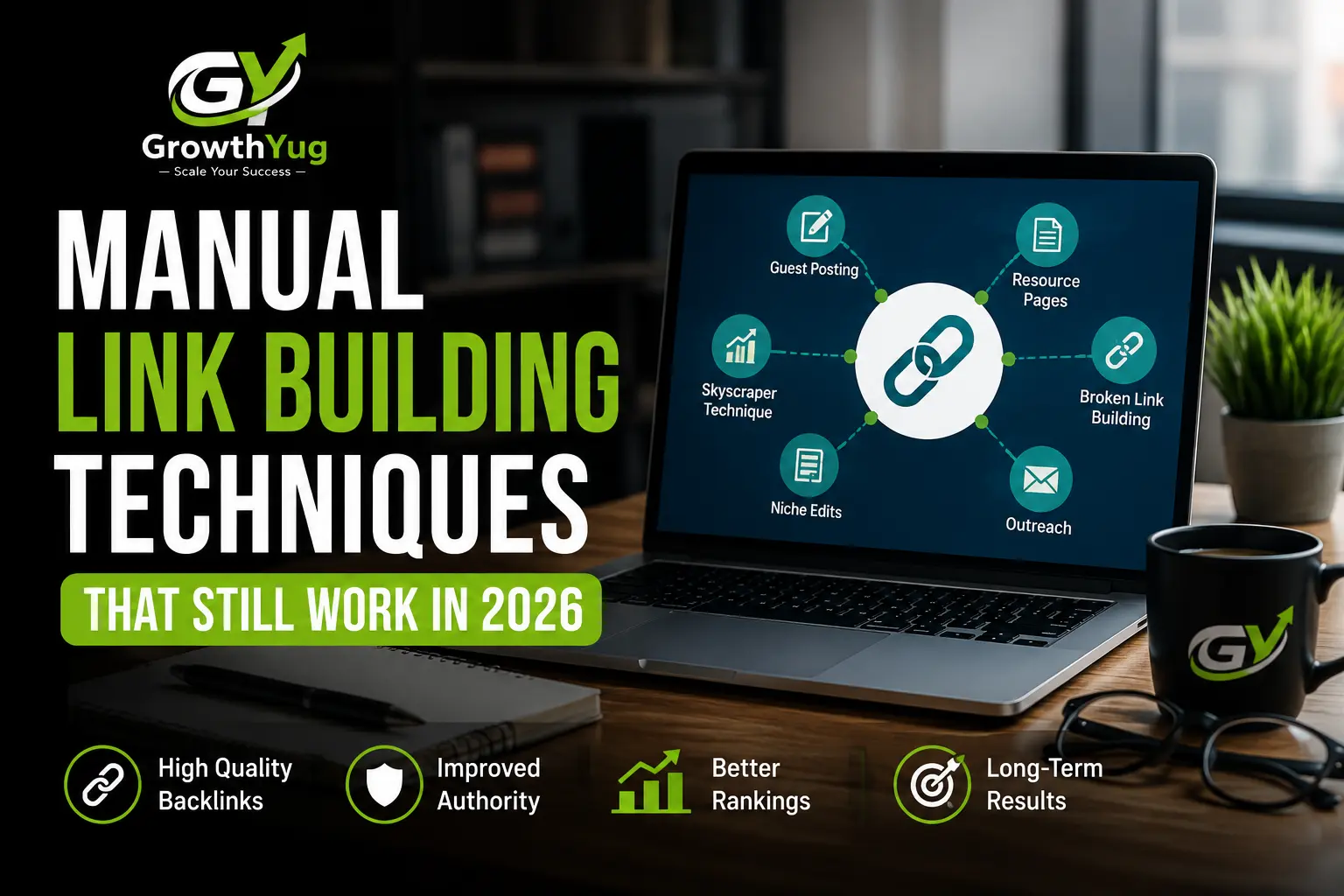
Manual Link Building Techniques That Still Work in 2026
Search engine optimization has changed a great deal in the last few years. A computer program gets smarter when you change its algorithm. A lot of the web’s content was made by AI, and hackers are finding and blocking automated link schemes faster than ever. Ignoring everything else, there is still one way that always works: one link at a time.
On occasion, these tools get you a lot of backlinks quickly and do what they say they will do. But sometimes they don’t stay together. They’re not even found by some search engines, and when they are, sites get punished in ways that are hard to fix and cost a lot of time and money. It takes friendliness, good content, and getting to know other people to build backlinks by hand. Online search engine spiders should value links like that.
This guide’s steps show you how to build links by hand in 2026 and explain why each one still works.
Everything You Need to Know About Building Links by Hand
“Manual link building” means getting backlinks by hand, without using software or link schemes. To do this, you need to find related websites, get in touch with them, and write content that gets links on its own.
If you hire a service that builds links by hand, your backlink profile will slowly get bigger. Additionally, it will be strong against algorithm checks in various ways. There are things you can do, like write content, keep in touch with people you already know, and check for broken links often.
Links that really work will send people to the site from other sites, and it will show that the editorial staff backs it. But it takes time and consistency.
What are the Pros of Manual Link Building in 2026?
Google now sees links in a very different way than it did in the past. There’s no doubt that editors add links that are related to the content, which is becoming more and more clear over time. One thing Google does to find link spam is to use the Helpful Content framework.
It either doesn’t get looked at or gets you in trouble.
These things make it even more important to now build links by hand.
As AI creates more content, it’s better to have real editors. It shows that the editor or webmaster has thought about how good and useful a page is when they link to it. The power signal for the raw link isn’t very strong, but it can be sent many times.
Google also knows more about how to rank sites based on how authoritative they are on a certain topic. Numerous bad links from sites that aren’t related or aren’t very good are now worth less than a few good links from well-known publications in the same field. To get in touch with a lot of people isn’t as important right now as slowly building links.
Last but not least, strange link speeds are still a clear sign that something is wrong. Advertisements that get a lot of links quickly get more attention. On the other hand, a site naturally gets backlinks through slow, fake link growth when people trust it.
Method 1: The Building Process for Skyscraper Links
A planned way to get links from content is the “skyscraper method.” Finding content that already has a lot of backlinks is the first step. Next, make the content better and contact the sites that link to the original to offer them the better resource instead.
Because it’s based on real events, this method works. No one will get anything from the page you link to if they don’t know about it. They are already interested, so you are just getting in touch with them.
In 2026, there should be a much higher bar for what is “superior.” Before, word count and a general sense of being done were important. Now, AI tools can write longer pieces quickly. This is a good way to go if you have interviews with experts, data that can’t be shared, or frameworks that are hard to copy. Everyone should be able to find the page that links to the other resource and know what the new content adds.
Method 2: Guest Posts for Websites
Anyway you look at it, writing guest posts is still a good way to get links by hand, as long as you mean well and follow the rules for editors. Good things happen when an interesting guest post appears on a good website. A guest post with nothing to say is bad.
They get a backlink in the right place and look like an expert in their field when they publish a useful, well-researched article in a reputable trade magazine. You can benefit from both outcomes for SEO in more ways than one.
Pay attention to a few good publications instead of a lot of bad ones if you want this method to work best. Numerous people try to get their writing accepted by well-known periodicals. Most of the time, the ones that get accepted are clear, important, and based on real facts. It is always turned down when an author’s submission is too broad or doesn’t show that they know what the publication is writing about.
To get your work published again, you need to have already written for a magazine or newspaper. In the long run, this will be helpful.
Technique 3: Digital PR Along With Original Research
Giving them original data and research is one of the best ways to get well-known publications to link to your site. This works for publications that don’t let people send them regular emails or guest posts.
Most of the time, editors and reporters use links to studies, polls, reports, and other sources to help them write their stories. When brands make this kind of content, they keep making editorial links possible without having to go out and find each one.
Original poll results, yearly industry benchmarks, proprietary tools or calculators, and data-backed commentary on current issues in a certain industry are all types of content that editors always talk about and link to. Any study with only a few hundred people in a niche market can get media attention if the results are interesting and the way the study was done is clear.
More and more people believe that a strong digital PR campaign is an important part of a full-service that builds links by hand. It makes the most reliable links that are hard to copy, which is why it’s useful.
Technique 4: Broken Link Building
Broken link building is a way to get new customers by finding pages with dead outbound links that are still relevant and trustworthy and suggesting good content to fill those gaps. The outreach works because it is helpful, not self-serving. The webmaster already has a problem, and the outreach gives them a way to solve it.
You can use Ahrefs or Semrush to find pages in your niche that have broken outbound links. Then, you can figure out what content is already available (or can be created) that can be used instead, and then you can contact the webmaster with that information.
While cold content pitches don’t get as many responses, warm ones do because the value exchange is clear and quick. When this happens, it’s very important that the context is relevant. The new resource should have the same topic and goal as the old one as much as possible. Not many people will be willing to use general content instead of very specific resources.
Technique 5: Resource Page Link Building
Source pages are carefully picked groups of links that are all about the same thing. Blogs, industry groups, niche publications, and academic institutions keep them up to date. They’re in almost every business, and you can trust them to put links in places that make sense in the context.
A quick and easy way to find useful resource pages is to use Google’s search operators. If you use queries like intitle:resources “topic” or inurl:links “niche keyword,” you can find pages that are set up to help you find good links. Take a close look at every page of your pitch before you send it. The content needs to tie in with the page’s theme and add something new.
Requests to add a resource page should be short. Messages that clearly describe the resource, who it’s for, and why it would be useful to have on the page get the most attention from webmasters who are in charge of these pages. A lot of people use the same long pitches or templates, and they rarely work.
Technique 6: Turning Unlinked Brand Mentions Into Links
It is a good chance to reach out to a website that talks about a brand, product, or piece of content without linking to it. It’s much easier to get someone to convert when they’ve already shown some awareness and support. This isn’t the case when you’re cold prospecting.
In this case, outreach means finding the mention, making sure the page is indexed and has real authority, and then sending a short, friendly message to thank the page for the mention and ask them to add a link. The mention alone is enough to start the relationship; the message doesn’t need to go into more depth.
You can use tools like Google Alerts, Brand24, and Mention to stay on top of real-time mentions of your brand. This method can help brands get a lot of links every month with little work if they are talked about a lot in business content.
Technique 7: Media Outreach and Expert Commentary
For a steady flow of editorial links from news outlets, make sure that subject matter experts in your organization are seen as reliable sources that can be quoted. Another thing is that this method takes longer than others, but the links it makes are usually from the most reliable sites.
In practice, this means monitoring reporters’ questions on sites like Connectively, Qwoted, or SourceBottle and responding to them. These sites are where reporters are actively looking for expert opinions for articles they are writing. It also means actively pitching commentary or analysis to journalists who write about related topics and contributing to blog posts that list experts in a certain area.
A consistent appearance in the news builds a recognizable profile over time, which leads to more people asking for advice. When you use this method, you get links that look like they belong in an editorial, which makes it easy for people to copy them.
Technique 8: Links Through Business Relationships
When you have business relationships, you can often find ways to build links that haven’t been used yet. People who are partners, vendors, technology integrators, resellers, or happy customers often have websites where it makes sense to link to a related business.
If a vendor’s website has client case studies, testimonials with a company name and link, or partner content with hand-picked tool or service suggestions, they are likely to be in this group.
You don’t have to do much to get these links because the relationship already exists and the placement is perfect. Because it’s easy to forget about them, they should be the first thing that any program that builds links by hand does.
Making A Program For Building Links By Hand That Will Last
Individual techniques for building links work best when they are used as part of a unified, well-run program, not as separate campaigns.
Maintaining reasonable expectations is important. Link building by hand takes longer to see results than automated methods, but the results last longer. A link earned through real outreach and editorial placement is less likely to be discarded by future algorithm updates. On the other hand, schemes often lead to links that need to be replaced all the time.
As important as execution is, measuring the right indicators. More important than the number of links is the quality of those links, which can be judged by things like domain authority, topical relevance, and the page’s own traffic. The variety of referring domains and the distribution of anchor text should also be checked on a regular basis.
A program that lasts needs assets that can be linked together. Original research, complete reference guides, free tools, and authoritative industry resources are all examples of content that really deserve links. This gives outreach campaigns something real to promote and raises response rates across all methods.
Lastly, detailed documentation makes things work better over time. Teams can keep improving their approach and put their efforts where they will be most useful by keeping track of which prospect sources, outreach templates, and follow-up sequences get the best results.
Conclusion
One of the most reliable parts of a long-term SEO strategy is still building links by hand. As search engines have gotten better at finding and disabling manipulative link building, they have put even more value on real, editorially placed links that are relevant to the content.
This guide’s techniques work not because they take advantage of holes in the way search engines work, but because they are in line with what search engines are meant to reward: content that gets praise from real people on trustworthy websites. This is the standard that doesn’t change when algorithms are updated, which is why a good manual link-building service will still work in 2026 and beyond.