
What Is a Backlink Database and How Does It Work?
When I work on SEO, one of the first things I want to understand about a website is its backlink profile. I need to know which websites are linking to it, which pages are receiving those links, what anchor text is being used, whether important links are still live, and how competitors are earning links. Looking at backlinks manually isn’t practical once a website has hundreds or thousands of links. This is where a backlink database becomes useful.
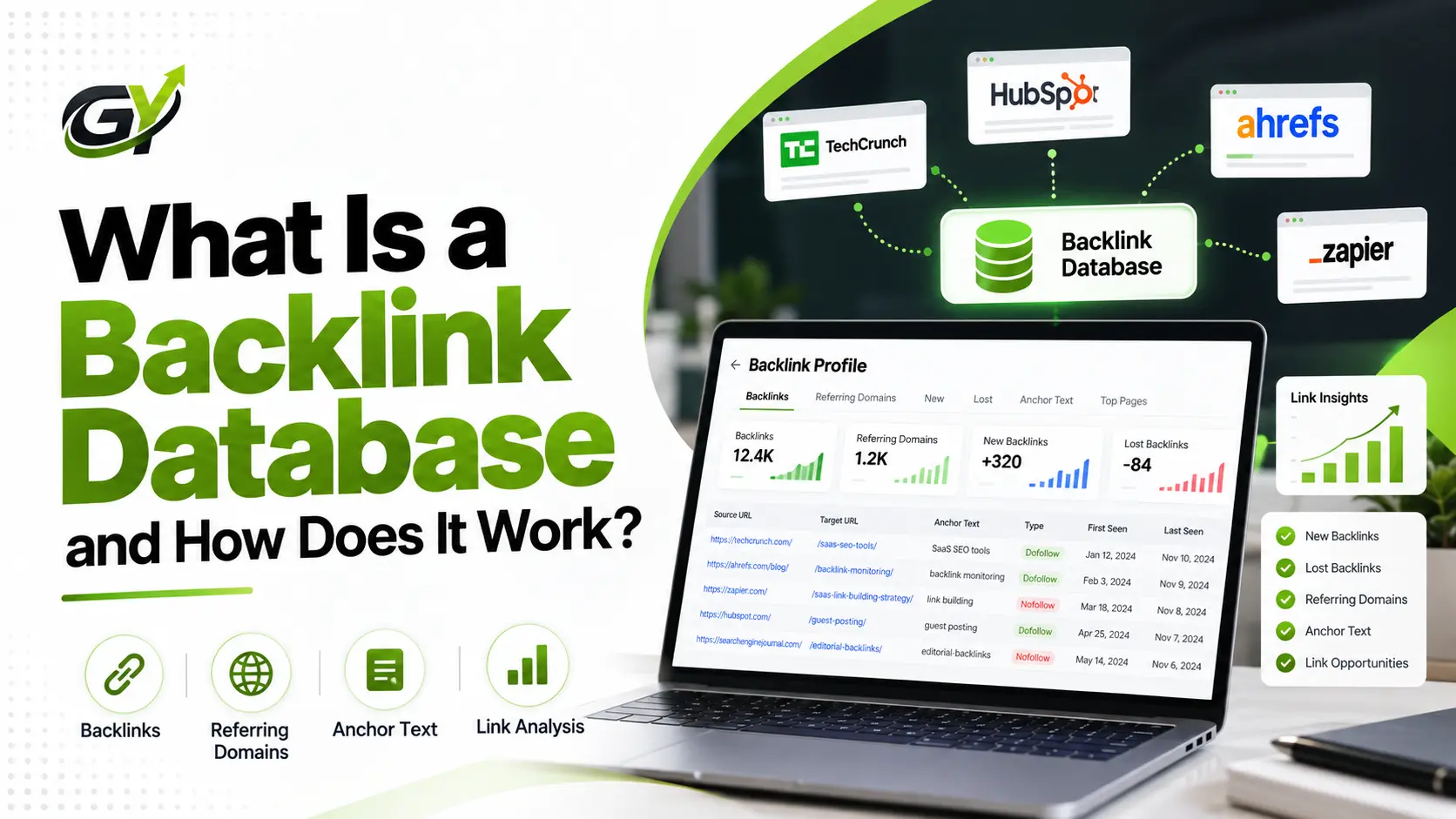
A backlink database is essentially a large collection of backlink information discovered and organized by an SEO platform. It gives SEO professionals a way to research backlinks, referring domains, linked pages, anchor text, and historical changes without manually checking websites one by one. In my own SEO work, I use this type of backlink data for competitor research, link-building planning, backlink analysis, and monitoring changes in a website’s link profile.
But there is an important distinction: a backlink database isn’t a complete copy of every link that exists on the internet. Different SEO platforms crawl different parts of the web, update their indexes at different speeds, and have different levels of historical data. Understanding how that works makes backlink data much more useful.
What Is a Backlink Database?
A backlink database is an index of backlink information collected from websites across the web.
A backlink is a link from one website to a page on another website. For example, if Website A publishes an article and links to a page on Website B, Website B has received a backlink from Website A.
A backlink database stores information about these links so they can be searched and analyzed.
Depending on the SEO platform, the database may contain information such as:
- The page where the link was discovered
- The page receiving the link
- The referring domain
- Anchor text
- Link attributes
- First discovered date
- Last seen date
- Domain-level metrics
- Page-level metrics
- Historical backlink information
- New and lost backlinks
It also helps distinguish between individual backlinks and referring domains. For example, 50 backlinks from one website are still only one referring domain.
That distinction matters to me when evaluating a backlink profile. I don’t want to look only at the total number of backlinks. I want to understand how many unique websites are actually referring to the domain and what those links represent.
A simple example
Imagine a SaaS company has 500 backlinks.
At first glance, 500 might sound impressive. But suppose 350 of those links come from only three domains.
The backlink database makes that pattern easier to identify.
I can then investigate:
- Which three domains are linking repeatedly?
- Which pages are receiving those links?
- Are the links editorial or sitewide?
- Are the referring websites relevant?
- Is the company attracting links from many different domains?
- Which content is earning the most links?
That context is much more useful than simply looking at the number “500.”
How Does a Backlink Database Work?
A backlink database is built through a combination of web crawling, link discovery, data processing, indexing, and updating.
The exact technology differs between SEO platforms, but the basic process can be understood in a few steps.
1. Crawling the web
SEO platforms use crawlers to discover publicly accessible web pages.
A crawler visits pages and follows links between them. When it encounters a link pointing to another URL, that relationship can become part of the platform’s backlink data.
The scale of this process is enormous because the web contains billions of pages and links.
2. Discovering backlinks
Once a crawler discovers a link, the platform records information about the source and destination.
For example:
Source page:
example.com/seo-guide/
Target page:
growthyug.com/saas-link-building-strategy/
Anchor:
SaaS link building strategy
The platform can then associate that link with the target website’s backlink profile.
3. Storing backlink information
The discovered information is stored in a searchable index.
The database may record the source URL, target URL, anchor text, link attributes, discovery dates, referring domain, and other signals.
This allows an SEO professional to filter and analyze the data rather than manually inspecting individual pages.
4. Processing and categorizing the data
Raw crawl information isn’t particularly useful on its own.
SEO platforms process the data and organize it into useful categories such as:
- Referring domains
- Backlinks
- Anchors
- Linked pages
- New backlinks
- Lost backlinks
- Domain metrics
- Page metrics
This makes it possible to answer practical SEO questions much faster.
5. Updating the database
The web is constantly changing.
Pages are deleted. Articles are updated. Links are removed. Websites move to new URLs. Pages are redirected. A previously discovered backlink can disappear.
Because of this, backlink databases need to be crawled and updated continuously.
This is also why I treat backlink data as a moving dataset rather than a permanent record.
6. Making the data searchable
Finally, the information is made available through the SEO platform’s interface.
Instead of manually checking thousands of pages, I can search a domain and investigate its backlink profile, referring domains, anchors, linked pages, and changes over time.
However, different databases have different crawlers, indexes, update frequencies, and historical coverage. So I never assume that one tool represents every backlink that exists on the web.
What Information Can You Find in a Backlink Database?
The exact information varies between platforms, but several data points are particularly useful when I analyze backlinks.
Source URL
This is the page containing the backlink.
Knowing the source page helps me understand the context in which the link was placed.
Target URL
This is the page receiving the backlink.
This is important because it shows which pages are attracting links rather than simply showing the overall domain.
Referring domain
The referring domain is the website providing the backlink.
I pay close attention to referring domains because a diverse backlink profile can tell a very different story from hundreds of links concentrated across only a few websites.
Anchor text
Anchor text is the clickable text used for the link.
Looking at anchor text helps me understand how other websites are describing or referencing the target page.
Link attributes
Backlink databases can also provide information about link attributes such as nofollow and other attributes.
These details can help provide a more complete picture of how a backlink was implemented.
First discovered and last seen dates
These dates can help determine when a link was discovered and whether the crawler has recently seen it.
This is especially useful when investigating new or potentially lost backlinks.
Domain and page metrics
Many SEO platforms provide proprietary metrics for domains and individual pages.
I use these as supporting signals rather than treating a single metric as the definition of backlink quality.
New and lost backlinks
Historical changes are particularly useful.
New backlinks can reveal recent link acquisition, while lost backlinks can show where a previously discovered link is no longer being seen.
Why Is Backlink Data Important for SEO?
Raw backlink data becomes valuable when I use it to answer specific SEO questions.
Understanding a backlink profile
I can see which domains are linking to a website, which pages receive the most links, and what types of content attract references.
This gives me a much clearer picture of the site’s external authority and link ecosystem.
Finding new backlinks
New backlinks can reveal successful content promotion, PR activity, partnerships, editorial mentions, or link-building campaigns.
I can also investigate whether a newly discovered link is relevant and worth monitoring.
Detecting lost backlinks
Lost backlinks aren’t automatically a problem.
Sometimes a page is deleted. Sometimes an article is updated. Sometimes a website changes its structure.
I look at the context first before deciding whether a lost link deserves recovery.
Competitor backlink research
This is one of the most practical uses.
Instead of asking only, “How many backlinks does my competitor have?” I want to know:
- Who links to them?
- Which pages attract those links?
- What topics generate references?
- Are certain publications linking repeatedly?
- Are there patterns in their link acquisition?
Finding link-building opportunities
Competitor backlink research can reveal websites, publications, resource pages, listicles, and industry sources that may be worth investigating.
The important part is not copying every backlink. It’s understanding why that link exists and whether a similar opportunity is genuinely relevant.
Evaluating referring domains
I prefer to look beyond raw backlink counts.
A backlink profile with many links from a small number of unrelated websites can tell a very different story from one with links from a broader set of relevant domains.
Backlink Database vs Backlink Monitoring Tool
These two concepts are closely related, but they aren’t exactly the same.
A backlink database is the broader collection or index of backlink information.
Backlink monitoring is the process of continuously checking a backlink profile for changes.
For example, a database may contain information about links that have been discovered over time. A monitoring system can use that information to identify changes such as:
- A new backlink appearing
- A backlink disappearing
- A target URL changing
- An anchor changing
- A link attribute changing
When I need to compare tools specifically designed to track these changes, I look at dedicated backlink monitoring tools rather than treating every backlink database as a monitoring system.
The two functions overlap, but their purpose is slightly different.
How I Use Backlink Data in SEO
In my own SEO work, I rarely look at backlinks just because I want to know the number.
I use backlink data to investigate what is actually happening behind a website’s link profile.
When I analyze a website, I usually look at several things together.
First, I review the referring domains. This helps me understand where the site’s external references are coming from.
Then I look at the pages receiving backlinks. If one blog post is attracting significantly more links than other pages, I want to understand why.
I also examine anchor text and the context around important links. A link placed naturally within a relevant article tells me more than a raw backlink count.
For competitor research, I look for patterns. If several competitors are receiving links from similar types of websites, that can reveal an industry-specific link opportunity worth investigating.
I’ve also learned not to treat every backlink equally. A backlink can exist in a database and still have limited practical value. Relevance, context, placement, and the quality of the referring website all matter.
How to Use a Backlink Database for SaaS SEO
SaaS websites can get a lot of value from backlink databases because the SaaS space is highly competitive and often requires strong content and link acquisition strategies.
I can use backlink data to identify:
- Industry publications
- SaaS directories
- Resource pages
- Competitor link sources
- Listicles
- Editorial opportunities
- Partner websites
- Relevant referring domains
For example, if I’m analyzing a SaaS competitor, I can identify the pages that attract the most referring domains. That tells me which subjects or resources have already demonstrated the ability to earn attention.
I can then use SaaS SEO tools to combine backlink research with broader keyword and organic-search analysis.
The next step is understanding how those links were earned and whether there is a legitimate way to create something equally useful.
For a broader campaign, I also consider the site’s overall SaaS link building strategy rather than treating backlinks as an isolated activity.
How to Find New and Lost Backlinks
One of the useful features of backlink databases is the ability to identify changes over time.
New backlinks
A newly discovered backlink can indicate that another website has recently referenced your content.
I usually investigate:
- Where the link came from
- Which page received it
- Why the page linked
- Whether the source is relevant
- Whether the link is still live
- Whether the page itself has value
Lost backlinks
A lost backlink means a previously discovered link is no longer being detected.
But I don’t automatically try to recover every lost link.
For example, a low-value directory link that disappears isn’t necessarily worth pursuing.
A lost editorial link from a highly relevant publication is a different situation.
I look at the referring domain, page context, target page, and reason for the loss before deciding whether recovery makes sense.
Temporary crawl issues can also make backlink data appear inconsistent, so I avoid making decisions from a single data point.
How Backlink Databases Help With Competitor Research
Competitor backlink research is one of the areas where I find backlink databases particularly useful.
My process is fairly straightforward:
- Choose a relevant competitor.
- Review its referring domains.
- Identify the pages attracting links.
- Look for recurring link sources.
- Analyze why those pages are being linked to.
- Determine whether the opportunity is relevant to my website.
- Find a legitimate way to earn or request a similar link.
The important distinction is that competitor backlinks are research opportunities, not automatic link targets.
If a competitor has a backlink from a website that has nothing to do with my industry, copying that link doesn’t make sense.
Instead, I look for patterns.
For example, if several competitors have earned editorial references because they published original research, that tells me something about the type of content the industry finds link-worthy.
Backlink Database vs Backlink Analysis
A backlink database and backlink analysis are related but different.
Collecting backlink data means gathering information about links.
Backlink analysis means interpreting that information.
Backlink monitoring means tracking changes in that information over time.
Think of it this way:
Database = information
Analysis = interpretation
Monitoring = change detection
A backlink analysis database provides the raw information needed for research, but the value comes from how an SEO professional interprets it.
For example, knowing that a competitor has 10,000 backlinks isn’t enough.
I want to know:
- How many referring domains?
- Which pages attract links?
- Which domains are relevant?
- What types of content earn links?
- What anchor patterns exist?
- Which links are new?
- Which have been lost?
That is where backlink analysis becomes useful.
How Accurate Are Backlink Databases?
This is one area where I think SEO professionals need to be realistic.
No third-party backlink database can be treated as a perfect representation of every backlink on the internet.
There are several reasons.
Crawl frequency
A crawler may not revisit every page at the same frequency.
Crawl depth
Some pages are easier to discover than others.
Index size
Different platforms maintain different indexes.
Discovery speed
One tool may discover a backlink before another tool does.
Blocked pages
Some websites restrict crawlers or require access that prevents certain data from being collected.
JavaScript-generated links
Links generated dynamically can create additional crawling and discovery challenges.
Temporary changes
A link may disappear temporarily and later return.
Update frequency
Different platforms update their databases on different schedules.
This is why two SEO tools can show different backlink counts for exactly the same website.
When I see a discrepancy, I don’t automatically assume one tool is wrong. I first look at how each platform defines and reports its data.
Limitations of Backlink Databases
Backlink databases are powerful, but they have limitations.
The most obvious one is incomplete coverage.
No database sees the entire internet at exactly the same time.
There can also be delays between a backlink being published and the backlink appearing in an SEO platform.
Other complications include:
- Outdated links
- Duplicate URLs
- Canonicalized pages
- Redirects
- Deleted pages
- Changed link attributes
- Crawl restrictions
- Different database methodologies
This is why I use backlink databases as SEO intelligence rather than absolute truth.
The data helps me investigate what is happening, but important decisions should be based on context.
How I Evaluate Whether a Backlink Is Actually Valuable
I don’t judge a backlink purely by DA or DR.
Those metrics can be useful as quick reference points, but they don’t tell the entire story.
When I evaluate a backlink, I consider:
Topical relevance
Is the referring website actually related to the subject?
Referring domain quality
Does the website appear useful, legitimate, and relevant to its audience?
Page context
Why does the link exist on that particular page?
Editorial placement
Was the link naturally included within useful content?
Traffic potential
Could the referring page realistically send relevant visitors?
Link placement
Is the link part of the main content or hidden in an area that provides little contextual value?
Surrounding content
Does the content around the link make sense?
Naturalness
Does the link make sense for a real user?
User value
Most importantly, does the link actually help someone reading the page?
This approach prevents me from chasing backlink counts simply because a tool reports a large number.
Backlink Database and Link Building
Backlink databases become particularly useful when they’re connected to an actual link-building process.
For example, I can use backlink research to identify websites that regularly publish relevant industry content.
From there, the strategy might involve earning editorial backlinks through genuinely useful content and outreach.
If competitors are frequently mentioned in comparison articles and industry roundups, I can investigate opportunities for listicle link building.
Guest contributions can also be part of a broader strategy when the publication is genuinely relevant. In those cases, guest posting should be approached as a way to contribute useful expertise rather than simply inserting a link.
The database helps me discover opportunities. It doesn’t replace the actual strategy required to earn a worthwhile link.
What About Brand Mentions?
Backlink research can also reveal opportunities around brand mentions.
A company may be mentioned by another website without receiving a clickable backlink.
That can be worth investigating, especially when the mention appears in relevant editorial content.
This is where brand mention link building can become part of a broader link-acquisition strategy.
However, I don’t assume that every unlinked mention should automatically be converted into a backlink.
The context matters.
If the mention is relevant and the website has a legitimate reason to update the reference, outreach can make sense. The goal should still be to provide value rather than simply asking every website for a link.
Practical Example: How I Would Analyze a Website’s Backlink Profile
I’ll use a hypothetical SaaS website here rather than presenting confidential client data.
Suppose I’m analyzing a SaaS company that sells project-management software.
Step 1: Check referring domains
I first look at the websites linking to the domain.
I’m interested in the quality and relevance of those domains, not just the total count.
Step 2: Look at the most-linked pages
Next, I identify which pages attract the most backlinks.
If a research report has significantly more referring domains than ordinary blog posts, that tells me original data may be one of the site’s strongest linkable assets.
Step 3: Review anchor text
I examine how other websites refer to the page.
This helps me understand whether the links are branded, descriptive, generic, or otherwise contextual.
Step 4: Identify new and lost links
I check recent changes.
New links may reveal successful content promotion or new mentions, while lost links can highlight pages worth investigating.
Step 5: Compare competitors
I then perform the same analysis on several competitors.
The objective isn’t to copy their backlink profile.
Instead, I’m looking for repeated patterns.
If multiple competitors are earning links from SaaS publications, industry resources, or research-driven articles, that gives me a direction for further research.
Step 6: Decide what deserves further investigation
Finally, I separate useful opportunities from irrelevant ones.
This is an important step because backlink databases can produce a huge amount of information.
The goal isn’t to collect more data.
The goal is to make better SEO decisions using the data.
Frequently Asked Questions
What is a backlink database?
A backlink database is an indexed collection of backlink information discovered by an SEO platform’s crawlers. It can contain information such as source URLs, target URLs, referring domains, anchor text, link attributes, and discovery dates.
What is stored in a backlink database?
Depending on the platform, it can store source and target URLs, referring domains, anchor text, link attributes, first and last seen dates, page and domain metrics, and historical backlink information.
How do backlink databases find links?
SEO platforms use crawlers to discover publicly accessible web pages and the links contained within them. The discovered information is processed and stored in a searchable index.
Are backlink databases accurate?
They can be extremely useful, but they aren’t complete representations of every backlink on the web. Coverage, crawl frequency, discovery speed, index size, and update frequency differ between platforms.
What is the difference between backlink monitoring and backlink analysis?
Backlink analysis involves interpreting backlink information to understand a website’s link profile. Backlink monitoring focuses on tracking changes such as new and lost links over time.
What is the best way to use backlink data?
The best approach is to use backlink data as part of a broader SEO process. I use it for competitor research, backlink analysis, link-building research, and monitoring changes rather than focusing only on backlink counts.
Can a backlink database find every backlink?
No. Different databases have different crawling capabilities and indexes, and some pages or links may not be discovered or may not be accessible to crawlers.
How often is backlink data updated?
It varies by SEO platform, website, page, and crawling frequency. Some links may be discovered quickly while others can take longer to appear in a database.
Why do different SEO tools show different backlink counts?
Different tools use different crawlers, indexes, discovery methods, update schedules, and data-processing systems. As a result, their backlink counts don’t have to be identical.
Conclusion
A backlink database is much more than a list of websites linking to a domain. For me, its real value comes from the information and patterns I can extract from that data.
I can use it to understand a backlink profile, investigate competitors, find new backlinks, evaluate referring domains, identify lost links, and discover potential link-building opportunities. But I also need to remember that no database has perfect coverage of the entire web.
The biggest lesson I’ve learned from working with backlink data is that backlink counts alone don’t tell the full story. I care more about relevance, context, referring-domain quality, the pages earning links, and whether those links make sense for users.
A backlink database gives me the information. Backlink analysis gives that information meaning. And when I combine both with a thoughtful link-building process, the data becomes much more useful for making SEO decisions.