
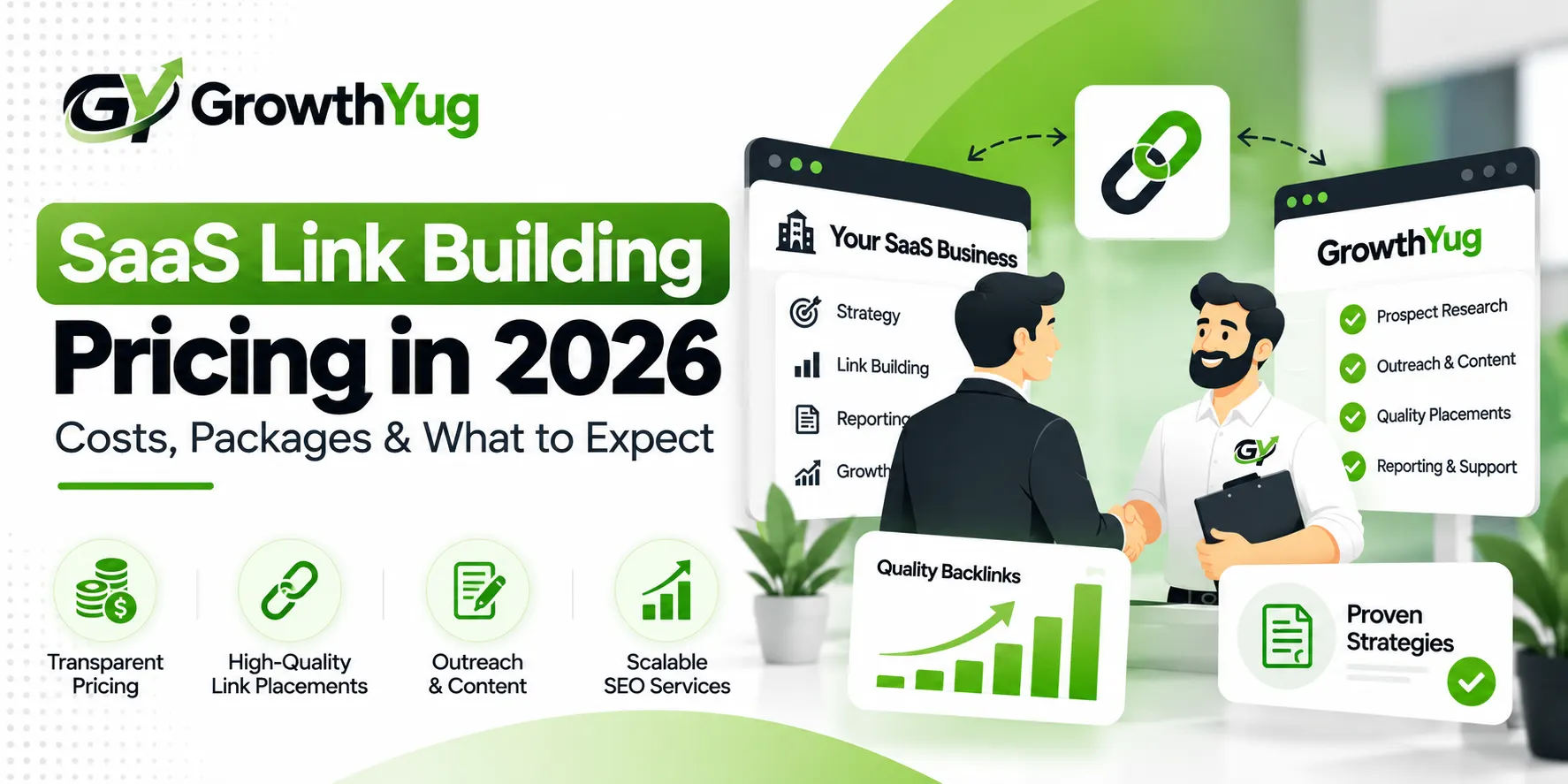
SaaS Link Building Pricing in 2026: Costs, Packages & What to Expect
SaaS link building helps software companies build online authority, attract relevant referral traffic, and strengthen their organic search strategy. But before investing in a campaign, most businesses want to understand one thing: how much does SaaS link building cost?
The price depends on the type of link, the quality of the publishing website, the outreach required, content production, and the level of campaign management. A standard guest post and an editorial placement in a respected industry publication involve different levels of effort and expense.
For SaaS businesses, choosing the cheapest package is rarely the best strategy. The priority should be acquiring relevant links from credible websites and investing in a campaign that supports long-term marketing objectives.
This guide explains SaaS link building pricing in 2026, common pricing models, the services available, and what to evaluate before choosing a link building agency.
How Much Does SaaS Link Building Cost in 2026?
SaaS link building pricing varies by provider, market, website quality, and campaign scope. The following figures are illustrative estimates for budgeting, not fixed prices or GrowthYug’s service rates.
| Link building service | Indicative pricing |
|---|---|
| Guest Posting | $200–$600+ per placement |
| Editorial Backlinks | $500–$1,250+ per placement |
| Brand Mention Links | Depends on research and outreach |
| Listicle Link Building | Depends on publication and placement |
| Managed monthly campaign | $2,500–$15,000+ per month |
Some placements cost less, while premium publications and digital PR campaigns can cost considerably more. Monthly agency packages may also include strategy, content creation, outreach, and reporting rather than charging exclusively per link.
The key takeaway: Compare the work, website quality, and deliverables behind each quote instead of comparing prices alone.
What Determines SaaS Link Building Pricing?
Understanding the factors that influence pricing makes it easier to evaluate proposals and allocate your SEO budget.
1. Website Relevance
A link from a website that covers your SaaS category can be more valuable to your marketing strategy than a link from an unrelated website.
For example, a cybersecurity platform should prioritise relevant technology, security, and business publications. A CRM company may focus on sales, marketing, productivity, and software comparison websites.
Relevant placements can connect your brand with the right audience and provide useful referral traffic opportunities.
2. Website Quality and Authority
Link building agencies often evaluate websites using metrics such as Domain Rating (DR), Domain Authority (DA), estimated organic traffic, and referring domains.
These metrics can help with initial screening, but they should not be treated as direct Google ranking scores. A website’s editorial standards, topical relevance, content quality, and audience are equally important considerations.
A website with a high authority score is not automatically a good placement.
3. Content Creation and Editorial Requirements
Some placements require a new article, expert commentary, original research, or substantial editorial review. Others may involve adding a relevant reference to existing content.
Pricing can include:
- Content research and writing
- Publisher prospecting
- Manual outreach and follow-ups
- Editorial revisions
- Placement coordination
- Quality checks and reporting
Ask whether these activities are included in the quoted price.
4. SaaS Industry Competition
Competitive SaaS categories often have many companies pursuing the same publishers and search terms. This can increase the time required to identify opportunities, develop suitable content, and secure placements.
The campaign budget should reflect the competitiveness of your niche and the quality of publications your audience actually reads.
5. Campaign Scope
A campaign targeting one product page is different from a comprehensive programme covering product pages, integration pages, comparison content, and thought leadership.
The more research, content, outreach, and coordination required, the more resources the campaign may need.
Common SaaS Link Building Pricing Models
Agencies and freelancers generally use one of three pricing approaches.
Per-Link Pricing
With per-link pricing, you pay for each placement that meets the agreed criteria. This can be suitable for a focused campaign or an initial test with a new provider.
Before agreeing, confirm the placement requirements, whether writing is included, the reporting process, and how removed or unavailable links are handled.
Monthly Retainer
A monthly retainer covers ongoing campaign activities such as prospect research, outreach, content coordination, placement management, and reporting.
This approach works well for SaaS businesses that want to build links consistently over time. However, confirm the expected deliverables and understand that publisher acceptance and placement volume can vary.
Custom Campaign Pricing
Custom campaigns are useful for digital PR, original research, product launches, and outreach to specialist industry publications.
The cost depends on the campaign concept, assets, publisher targets, and outreach effort. Evaluate the proposal based on its objectives and deliverables rather than an unconditional promise of link quantity.
Four SaaS Link Building Services to Consider
Different link building methods support different marketing goals. A strong campaign selects the methods that best fit the business rather than using the same approach for every website.
1. Guest Posting
Guest Posting involves contributing useful content to relevant external websites. For SaaS companies, it can create opportunities to demonstrate expertise, reach industry audiences, and earn contextual links where editorial guidelines permit.
A quality guest posting campaign starts with researching relevant publishers and developing topics that genuinely interest their readers.
Before choosing a provider, review:
- Website relevance and audience
- Content quality and originality
- Editorial standards
- Organic visibility and publishing history
- Placement terms and reporting
Avoid websites that publish large volumes of unrelated articles primarily to sell backlinks. A relevant, well-written contribution should provide value beyond the link itself.
2. Editorial Backlinks
Editorial Backlinks are links included within content because a publisher considers the reference relevant to its readers. They may be earned through expert insights, original data, useful resources, or targeted outreach.
These links can require more effort because the publisher controls whether to include a reference and how it is presented.
For SaaS businesses, potential opportunities include industry publications, specialist blogs, resource pages, and articles discussing relevant software categories.
The cost depends on the publication, outreach effort, content requirements, and campaign model. Focus on earning relevant editorial coverage rather than purchasing links solely to influence search rankings.
3. Brand Mention Links
Brand Mention Links involve finding relevant references to your company and identifying opportunities to connect those mentions to your website.
For example, an industry article might mention your SaaS product without linking to it. A polite outreach message explaining why a link would help readers may create an opportunity for an editorial update.
A brand mention campaign may involve:
- Finding unlinked brand mentions
- Researching relevant publications
- Identifying outdated product references
- Contacting publishers with a useful reason to update content
- Monitoring the results of outreach
Not every mention will become a backlink. Success depends on relevance, publisher discretion, and the value of the proposed update.
4. Listicle Link Building
Listicle Link Building focuses on relevant list-based content, including articles such as “Best SaaS Tools,” software comparisons, and industry roundups.
These pages can be useful for reaching potential buyers who are researching solutions before making a purchase.
For example, a customer support platform may look for relevant customer service software lists, while a project management product may pursue suitable productivity software roundups.
Evaluate each opportunity by checking the article’s relevance, editorial quality, audience, maintenance, and inclusion criteria. A placement should make sense for readers, not simply provide another backlink.
Important: Buying or selling links intended to manipulate search rankings can violate Google’s spam policies. Paid advertising placements should be appropriately qualified, commonly with rel="sponsored" or rel="nofollow" where applicable.
How to Choose the Right SaaS Link Building Package
The right package depends on your website’s current position, growth goals, target audience, and available budget.
| SaaS business stage | Recommended focus |
|---|---|
| Early-stage SaaS | Competitor research, backlink audit, and priority-page planning |
| Growing SaaS | Relevant guest posting, editorial outreach, and brand mention opportunities |
| Established SaaS | Industry publications, suitable listicles, original research, and digital PR |
| Highly competitive SaaS | Ongoing campaigns aligned with priority pages and broader SEO goals |
Before signing a contract, ask the provider:
- How are target websites selected?
- Will I approve the websites or topics before placement?
- Is content creation included?
- What reporting will I receive?
- How are link removals or changes handled?
- Are the placements editorially appropriate and compliant with relevant search engine policies?
- How will campaign progress be evaluated?
A transparent provider should be able to explain its process and the limitations of the proposed campaign.
How a Backlink Database Supports SaaS Link Building
A Backlink Database helps marketers research competitors, analyse referring domains, and identify potential link opportunities.
Depending on the tool, it may provide information about linking pages, anchor text, new and lost links, and competitors’ backlink profiles.
Use this information to discover:
- Websites linking to relevant competitors
- Publishers covering your software category
- Content attracting links in your industry
- Potential resource-page opportunities
- Changes in competitor backlink profiles
However, database results are only a starting point. Each prospect still needs to be reviewed for relevance, credibility, editorial standards, and audience fit.
Do not assume that every website linking to a competitor is worth approaching. The objective is to identify meaningful opportunities, not copy every backlink.
Best Backlink Monitoring Tools
The Best Backlink Monitoring Tools help SaaS teams track link acquisition, identify lost placements, and review changes in their backlink profiles.
Common options include Ahrefs, Semrush, and Majestic. Their features, data coverage, and pricing differ, so select a tool based on your campaign needs.
When comparing tools, consider:
- New and lost backlink monitoring
- Referring domain reports
- Anchor text analysis
- Competitor backlink research
- Export and reporting capabilities
- Historical backlink information
Monitoring is especially useful for checking whether important placements remain live and whether their surrounding content continues to be relevant.
Remember that a change in backlink metrics does not automatically mean your rankings will improve or decline. Interpret link data alongside organic search performance, content quality, and other SEO factors.
Best SaaS SEO Tools for Link Building
The Best SaaS SEO Tools support different stages of an SEO campaign, from backlink research to technical analysis and performance reporting.
Ahrefs: Useful for backlink research, competitor analysis, and identifying new or lost links.
Semrush: Supports backlink analysis, keyword research, competitive research, and broader SEO workflows.
Google Search Console: Helps monitor search impressions, clicks, indexing information, and organic performance.
Google Analytics: Helps analyse website engagement, referral traffic, and conversions.
Screaming Frog SEO Spider: Supports website crawling, technical SEO checks, and internal linking analysis.
You do not need every tool to run an effective campaign. Choose a toolkit that fits your workflow, budget, and reporting requirements.
Tools can help identify opportunities, but manual review remains essential. Metrics alone cannot establish whether a website is genuinely relevant to your target audience.
How to Measure SaaS Link Building Performance
A successful campaign should be evaluated through more than the number of backlinks acquired.
Track the following indicators:
Placement quality: Review website relevance, editorial context, and content quality.
Live link status: Check whether important placements remain accessible and unchanged.
Referral traffic: Measure visits generated by relevant external websites.
Organic search performance: Monitor impressions, clicks, and the visibility of target pages.
Business outcomes: Where possible, evaluate demo requests, trial registrations, qualified leads, or other conversions.
Campaign efficiency: Compare spending with completed deliverables and the resources required to earn placements.
Link building is one part of SEO. Results also depend on technical health, content relevance, competition, and the overall quality of your website. No provider can guarantee specific rankings simply by delivering a predetermined number of links.
SaaS Link Building Services at GrowthYug
GrowthYug helps SaaS businesses plan link building campaigns around relevant websites, thoughtful outreach, and business objectives.
Our services include:
- Guest Posting: Content-led outreach to relevant websites and publishers.
- Editorial Backlinks: Outreach focused on relevant editorial content and contextual link opportunities.
- Brand Mention Links: Research into brand references and opportunities for relevant editorial links.
- Listicle Link Building: Opportunities to pursue suitable software roundups, comparison articles, and industry lists.
The right service mix depends on your SaaS category, target pages, competitive landscape, content assets, and budget.
Rather than choosing a package based only on the number of links, focus on the quality of the proposed websites, the outreach process, transparent reporting, and the relevance of each placement to your business.
Explore GrowthYug’s SaaS link building services to find an approach that fits your SEO goals.
FAQs About SaaS Link Building Pricing
1. How much does SaaS link building cost in 2026?
SaaS link building costs $400–$500 per link for standard placements, while premium editorial backlinks range from $500–$1,250. Monthly packages typically cost $2,500–$15,000, depending on campaign scope and quality.
2. Is guest posting cheaper than editorial backlinks?
Guest posting can be less expensive than some premium editorial placements, but prices vary. Compare the publisher’s relevance, editorial standards, content requirements, and overall service before making a decision.
3. What should a SaaS link building package include?
A package may include prospect research, website quality checks, outreach, content creation, placement coordination, and reporting. Confirm the exact deliverables before signing an agreement.
4. What is the difference between brand mention links and editorial backlinks?
Brand mention link building focuses on opportunities to link references to your brand. Editorial backlinks are links included by publishers within content they consider relevant to readers. A brand mention may become an editorial backlink, but not every mention qualifies.
5. Why is a backlink database useful?
A backlink database helps you analyse competitor links, research potential publishers, identify content opportunities, and monitor changes in your backlink profile. Every prospect should still be checked manually before outreach.
6. Which backlink monitoring tools should SaaS companies use?
Ahrefs, Semrush, and Majestic are commonly used for backlink research and monitoring. The best choice depends on your budget, required features, and reporting workflow.
7. How long does SaaS link building take to show results?
Timelines vary depending on competition, website history, content quality, and broader SEO conditions. Link acquisition can be measured as placements go live, but improvements in organic visibility may take longer and are not guaranteed.
8. Can GrowthYug help with SaaS link building?
GrowthYug offers Guest Posting, Editorial Backlinks, Brand Mention Links, and Listicle Link Building. The appropriate strategy depends on your business objectives, target pages, and campaign requirements.
Related posts :