
How to Build a Monthly Backlink Monitoring Report: A Complete SEO Guide
Backlinks remain an important part of building website authority, improving search visibility, and strengthening an SEO strategy. However, building backlinks is only one part of successful link building. You also need to monitor them regularly to understand which links are helping your website, which have disappeared, and whether your backlink profile is growing naturally.
This is where a monthly backlink monitoring report becomes essential.
Whether you manage SEO for your own business, work as an SEO professional, or run a digital marketing agency, tracking backlinks every month helps you make informed decisions, identify potential risks, and measure the effectiveness of your link-building campaigns.
In this guide, we will explain how to build a monthly backlink monitoring report, which metrics to track, which backlink monitoring tools to use, and how to turn backlink data into actionable SEO improvements.
What Is a Monthly Backlink Monitoring Report?
A monthly backlink monitoring report is a structured document that tracks changes in your website’s backlink profile over a specific month.
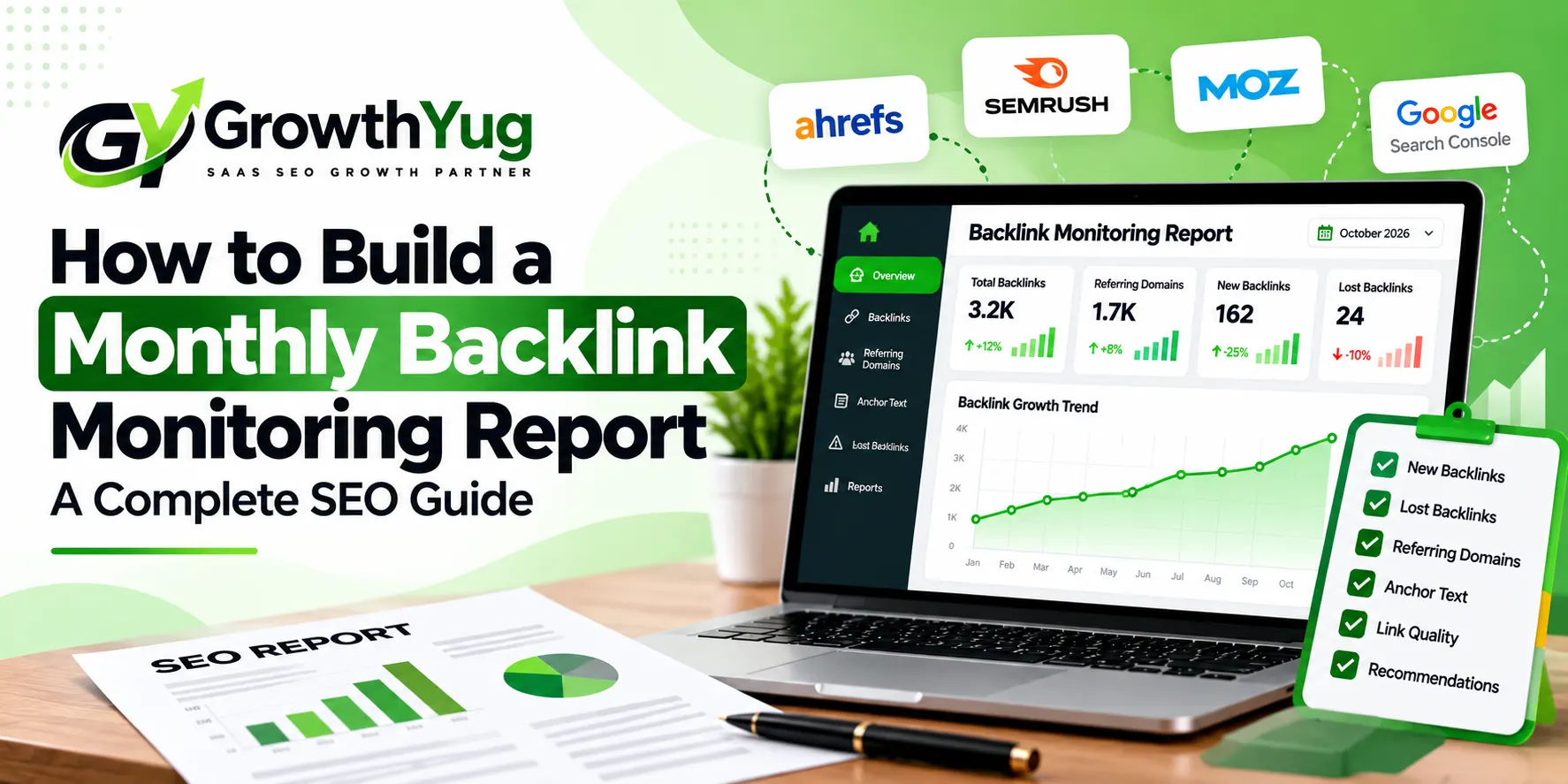
It provides an overview of newly acquired backlinks, lost backlinks, referring domains, link quality, anchor text distribution, and other important SEO metrics.
Instead of checking backlinks randomly, a monthly report gives you a consistent way to evaluate your link-building progress.
A typical backlink monitoring report includes:
- Total backlinks and referring domains.
- New backlinks acquired during the month.
- Lost and broken backlinks.
- Domain authority and other available quality indicators.
- Follow and nofollow link distribution.
- Anchor text analysis.
- Competitor backlink comparisons.
- Changes in important referring domains.
- Recommendations for future link-building activities.
For SEO agencies, SaaS companies, and businesses investing in link building, these insights help connect backlink acquisition efforts with long-term organic growth.
Why Is Monthly Backlink Monitoring Important?
Backlinks are not permanent. Websites update their content, remove external links, change URLs, or sometimes disappear entirely.
Without regular backlink monitoring, you may not notice these changes until they begin affecting your SEO performance.
Here are some reasons why monthly backlink tracking matters.
1. Identify New Backlinks
Tracking newly acquired backlinks helps you understand how your link-building strategy is performing.
You can identify which websites are linking to your content, which campaigns are generating results, and which types of content attract more backlinks.
2. Detect Lost Backlinks
A backlink that was previously active may disappear because a website owner updated a page, removed a link, or deleted the referring page.
A monthly backlink audit helps you identify lost links and determine whether they are worth recovering.
3. Evaluate Backlink Quality
Not every backlink provides the same SEO value.
Links from relevant, trustworthy websites can contribute to your website’s authority and visibility. On the other hand, irrelevant or manipulative link-building patterns may create risks.
Monitoring referring domains, topical relevance, placement, and link attributes helps you evaluate your overall backlink profile.
4. Measure Link-Building Campaign Performance
If you invest in guest posting, editorial placements, digital PR, or SaaS link building, you need to know what your campaigns deliver.
A monthly backlink report allows you to compare planned placements with live backlinks and evaluate campaign progress.
5. Understand Competitor Link-Building Strategies
Monitoring competitor backlinks can reveal websites, publications, and content opportunities that may also be relevant to your business.
This information helps you discover new link-building opportunities and improve your outreach strategy.
How to Build a Monthly Backlink Monitoring Report: Step-by-Step
Creating an effective backlink report does not require complicated processes. The key is to collect consistent data, organize it properly, and focus on actionable insights.
Step 1: Collect Your Backlink Data
Start by collecting backlink information from reliable SEO tools.
Some popular backlink monitoring tools include:
- Ahrefs: Useful for backlink discovery, referring domain analysis, lost backlinks, and competitor research.
- Semrush: Provides backlink analytics, referring domain insights, and backlink audit capabilities.
- Google Search Console: Offers Google’s view of some websites and pages linking to your website through its Links report.
- Moz Link Explorer: Helps analyze linking domains and link-related authority metrics.
- Majestic: Provides backlink analysis using metrics such as Trust Flow and Citation Flow.
You do not necessarily need every tool. Select the tools that match your reporting requirements and budget.
Export the available backlink data at the beginning or end of each reporting period and maintain a consistent monthly process.
Step 2: Track New Backlinks Acquired
The first important section of your report should highlight newly discovered backlinks.
Record the following information:
| Metric | What to Track |
|---|---|
| Referring URL | Website page linking to you |
| Target URL | Your page receiving the backlink |
| Referring domain | Website providing the link |
| Anchor text | Clickable text of the backlink |
| Link attribute | Follow, nofollow, sponsored, or UGC |
| First discovered date | When the tool detected the link |
| Placement type | Guest post, editorial, directory, resource page, etc. |
This information helps you identify which link-building activities are generating new backlinks.
Pro Tip: Separate newly discovered backlinks from backlinks that were actually acquired during the month. SEO tools may discover older links later, so the first detected date is not always the actual publication date.
Step 3: Monitor Lost Backlinks
Tracking lost backlinks is just as important as tracking new ones.
Create a separate section for links that disappeared during the reporting period.
Pay attention to:
- Pages that have been deleted.
- Backlinks removed from existing articles.
- Websites that have become unavailable.
- Links that now return errors.
- URLs that have changed or redirected.
- Pages where your backlink has been replaced.
Not every lost backlink requires immediate action.
Prioritize links from relevant, authoritative websites that previously sent referral traffic or supported important landing pages.
If a valuable backlink disappears, consider contacting the website owner to understand whether the link can be restored.
Step 4: Analyze Referring Domains
Backlinks represent individual links, while referring domains represent the unique websites linking to your website.
For example, 20 backlinks from five different websites represent five referring domains.
Tracking referring domains helps you understand whether your backlink profile is expanding across a wider range of relevant websites.
Your monthly report should include:
- Total referring domains.
- New referring domains.
- Lost referring domains.
- Relevant industry websites.
- High-quality editorial domains.
- Referring domain growth compared with the previous month.
Focus on acquiring links from relevant websites rather than simply increasing the total number of backlinks.
Step 5: Review Anchor Text Distribution
Anchor text is the clickable text used in a hyperlink.
A healthy backlink profile generally includes a natural mix of branded, generic, URL-based, and relevant descriptive anchor text.
Your report should categorize anchor texts into the following groups:
Branded Anchor Text: Your company or brand name.
Exact-Match Anchor Text: A keyword that exactly matches a target search phrase.
Partial-Match Anchor Text: A variation that includes your target keyword.
Generic Anchor Text: Phrases such as “click here,” “read more,” or “learn more.”
Naked URL: Your website address used directly as anchor text.
Monitor anchor text distribution to identify unnatural patterns and ensure that link acquisition follows a natural, editorial approach.
Avoid forcing exact-match keywords into every backlink. Relevance and genuine editorial context matter more than repetitive keyword placement.
Step 6: Evaluate Backlink Quality
A high backlink count does not automatically mean a strong backlink profile.
Evaluate each important referring domain using multiple quality indicators:
- Topical relevance to your industry.
- Website content quality.
- Organic search visibility.
- Real editorial value.
- Placement within relevant content.
- Traffic and audience relevance.
- Outbound linking patterns.
- Follow and nofollow attributes.
Third-party metrics such as Domain Rating, Domain Authority, and Trust Flow can help with comparisons, but they are not Google ranking factors.
Do not automatically classify every low-authority backlink as harmful. Google recommends evaluating links in context rather than treating third-party scores as definitive indicators of risk.
Step 7: Compare Your Backlink Profile With Competitors
Competitor backlink analysis can help you discover new opportunities for your next link-building campaign.
Identify three to five competitors and compare:
- Total referring domains.
- Newly discovered backlinks.
- Lost backlinks.
- Industry-specific referring websites.
- Content attracting backlinks.
- Editorial and guest post opportunities.
- Link-building gaps.
For SaaS businesses, this can reveal technology blogs, software review websites, industry publications, and resource pages that may be relevant to your brand.
Use competitor insights to identify opportunities rather than copying their backlink profiles.
Step 8: Track Link-Building Campaign Results
If you are running an active link-building campaign, your monthly report should connect acquired backlinks with campaign activities.
Track the following:
| Campaign Metric | What It Measures |
|---|---|
| Outreach emails sent | Total outreach activity |
| Positive responses | Interested publishers |
| Placements secured | Confirmed backlink opportunities |
| Live backlinks | Published and verified links |
| Referring domains acquired | New linking websites |
| Average placement cost | Cost per acquired placement |
| Lost placements | Previously live links that disappeared |
This section is particularly useful for SEO agencies and businesses outsourcing link building.
It helps you understand whether your campaigns are delivering the expected placements and whether your outreach strategy needs improvement.
Step 9: Measure Organic Search Performance
Backlink monitoring should not happen in isolation.
Connect your backlink reporting with Google Search Console and Google Analytics to understand how your website performs organically.
Review:
- Organic clicks.
- Search impressions.
- Average search position.
- Organic landing page performance.
- Relevant keyword movements.
- Referral traffic from linking websites.
- Conversions from organic traffic.
Remember that backlink acquisition does not guarantee ranking improvements. Organic search performance is influenced by many factors, including content quality, search intent, technical SEO, competition, and website experience.
Step 10: Add Recommendations for the Next Month
A backlink report should not simply describe what happened. It should also explain what to do next.
Based on your monthly findings, create a list of priorities.
For example:
- Recover valuable lost backlinks.
- Build relationships with relevant industry publications.
- Publish link-worthy content.
- Improve internal linking to important landing pages.
- Find new guest posting opportunities.
- Expand SaaS and technology website outreach.
- Review suspicious backlink patterns.
- Improve underperforming link-building campaigns.
This makes your report a practical SEO planning document rather than just a collection of numbers.
Monthly Backlink Monitoring Report Template
You can use the following structure to prepare a professional monthly backlink report.
| Report Section | Information to Include |
|---|---|
| Reporting Period | Month and year |
| Total Backlinks | Current backlink count |
| Referring Domains | Total unique linking domains |
| New Backlinks | Newly discovered links |
| Lost Backlinks | Links that disappeared |
| New Referring Domains | Newly discovered websites |
| Anchor Text Analysis | Branded, generic, and keyword anchors |
| Link Quality | Relevance and placement assessment |
| Competitor Analysis | Competitor backlink changes |
| Campaign Performance | Outreach and live placements |
| Organic Performance | Clicks, impressions, and rankings |
| Next Month’s Plan | Recommended SEO activities |
Reporting tip: Keep the same reporting format every month. This makes it easier to compare performance, identify trends, and communicate progress to clients or stakeholders.
Common Mistakes to Avoid in Backlink Monitoring
Even experienced SEO professionals can make mistakes when analyzing backlink data.
Here are some common issues to avoid.
1. Focusing Only on Total Backlinks
A higher backlink count does not necessarily indicate better SEO performance. Pay attention to referring domains, relevance, quality, and actual placement.
2. Ignoring Lost Backlinks
A valuable backlink can disappear without you noticing. Review lost links regularly and prioritize important opportunities for recovery.
3. Depending Only on Third-Party Authority Scores
Domain Rating and Domain Authority are useful comparative metrics, but they should never be treated as direct Google ranking signals.
4. Ignoring Anchor Text Distribution
Overusing exact-match commercial keywords can make a backlink profile look unnatural. Focus on relevant and editorially appropriate anchor text.
5. Not Connecting Backlinks With SEO Results
Backlink growth is only one part of SEO. Always review organic traffic, search visibility, and conversions alongside backlink data.
6. Creating Reports Without Actionable Recommendations
A good backlink monitoring report should help you make better decisions. Include clear observations, priorities, and next steps.
How Often Should You Monitor Backlinks?
For most websites, a monthly backlink report provides a useful overview of changes and campaign performance.
However, the monitoring frequency can depend on your website size and link-building activity.
- Small business websites: Monthly backlink monitoring is generally sufficient.
- SaaS websites: Monthly reporting with more frequent checks during active campaigns.
- SEO agencies: Monthly client reports with regular backlink verification.
- Large websites: More frequent monitoring may be useful due to higher backlink activity.
If you are running an aggressive link-building campaign, check important placements more frequently rather than waiting until the end of the month.
How GrowthYug Can Help You Build a Stronger Backlink Profile
Monitoring backlinks is important, but acquiring relevant, high-quality backlinks is equally important for long-term SEO growth.
At GrowthYug, we help SaaS businesses, technology companies, and digital marketing agencies strengthen their backlink profiles through strategic link-building solutions.
Whether you want to improve your website’s authority, expand your referring domains, or scale your SEO campaigns, our link-building approach focuses on relevant websites and meaningful placements.
Our services include:
- SaaS Link Building: Build relevant backlinks for SaaS and technology websites.
- Guest Post Link Building: Secure relevant editorial placements on industry websites.
- Editorial Backlinks: Strengthen brand authority through contextual placements.
- Competitor Backlink Analysis: Discover new link-building opportunities from competitor research.
- Brand Mention Links: Turn existing unlinked brand mentions into valuable backlinks by reaching out to publishers and requesting relevant links to your website.
- Listicle Link Building: Get your SaaS brand, products, or services featured in relevant industry listicles, comparison articles, and best-of roundups to increase visibility and earn contextual backlinks
We understand that every website has different SEO requirements. That’s why link-building strategies should be aligned with your industry, target audience, competition, and business objectives.
Ready to Strengthen Your Backlink Profile?
Don’t just count backlinks. Build a stronger foundation for sustainable organic growth.
Partner with GrowthYug for strategic SaaS link building, white label link building, and quality backlink acquisition.
Whether you’re a SaaS business looking to improve search visibility or an agency scaling its SEO services, GrowthYug offers link-building solutions tailored to your goals.
Explore our Link Building Packages and Pricing to find the right solution for your business.
Get in touch with GrowthYug today and start building a smarter, results-focused link-building strategy.
Final Thoughts
Building a monthly backlink monitoring report is an essential part of a well-managed SEO strategy. It helps you understand how your backlink profile changes, identify lost opportunities, evaluate link quality, and measure the progress of your link-building campaigns.
By using reliable backlink monitoring tools, reviewing referring domains, analyzing anchor text, and comparing organic search performance, you can make more informed SEO decisions.
Remember, successful link building is not about collecting the highest number of backlinks. It is about building relevant, trustworthy, and valuable connections that support your website’s long-term growth.
Need help growing your backlink profile? Connect with GrowthYug and explore strategic SaaS and white label link-building solutions.
Frequently Asked Questions (FAQs)
1. What should a monthly backlink monitoring report include?
A monthly backlink monitoring report should include new backlinks, lost backlinks, referring domains, anchor text distribution, backlink quality, competitor analysis, link-building campaign performance, and organic search metrics.
2. Which are the best backlink monitoring tools?
Popular backlink monitoring tools include Ahrefs, Semrush, Moz Link Explorer, Majestic, and Google Search Console. Each offers different backlink discovery and analysis capabilities.
3. How do I check new and lost backlinks?
You can use backlink analysis tools such as Ahrefs and Semrush to identify newly discovered and lost backlinks. Compare reports across consistent reporting periods to understand changes.
4. What is the difference between backlink monitoring and backlink auditing?
Backlink monitoring involves regularly tracking changes in your backlink profile, while a backlink audit is a deeper evaluation of backlink quality, relevance, patterns, and potential risks.
5. How many backlinks should a website build per month?
There is no fixed number of backlinks every website should acquire monthly. The right pace depends on your industry, competition, website authority, content quality, and link-building opportunities.
6. Are nofollow backlinks useful?
Nofollow links can provide referral traffic, brand exposure, and discovery opportunities. Google also treats link attributes as hints when evaluating links.
7. Why are backlinks disappearing?
Backlinks can disappear because publishers update articles, remove external links, delete pages, change URLs, or take websites offline. Regular monitoring helps identify these changes.
8. Can backlink monitoring improve Google rankings?
Backlink monitoring itself does not directly improve rankings. However, it helps SEO professionals identify lost opportunities, evaluate link-building activities, and make better decisions that support a broader SEO strategy.
9. What is white label link building?
White label link building allows SEO agencies and digital marketing companies to outsource backlink acquisition to a specialist provider while delivering the service under their own brand.
10. Why should businesses work with a link-building agency?
A specialist link-building agency can help businesses identify relevant websites, manage publisher outreach, acquire editorial placements, and scale link-building campaigns more efficiently.
Related Posts :
Backlink Monitoring vs. Backlink Analysis: What’s the Difference?
How to Build Brand Authority for Google & AI Search in 2026
How to Monitor New and Lost Backlinks: A Practical SEO Guide
What Is a Backlink Database and How Does It Work?
How to Evaluate Backlinks That Drive SaaS SEO Growth: GrowthYug Guide
GEO vs. SEO: How Search Optimization Is Changing in 2026
ChatGPT SEO: Rank Higher with AI in 2026