
Linkable Assets for SaaS: 7 Content Types That Drive Backlinks!
Building a strong backlink profile is essential for SaaS companies that want to improve search engine visibility, strengthen domain authority, and attract consistent organic traffic. However, earning quality backlinks is not always easy. Traditional link-building activities such as guest posting, blogger outreach, and editorial placements require continuous effort, time, and resources.
What if your SaaS website could attract backlinks because other websites genuinely want to reference your content?
That’s the idea behind linkable assets for SaaS.
Linkable assets are valuable resources that encourage other websites, publishers, bloggers, journalists, and industry professionals to reference your content and link back to your website. These resources can include original research, free tools, industry reports, downloadable templates, statistics, interactive calculators, and expert insights.
Unlike ordinary blog posts, well-developed linkable assets are created with a specific purpose: providing information or functionality that people naturally want to share.
For SaaS businesses, these assets can become an important part of a sustainable SEO strategy. They can attract relevant backlinks, support content marketing, generate referral traffic, and create opportunities for long-term organic growth.
In this guide, we’ll explore seven effective types of linkable assets, how to create them, how to promote them, and how to use backlink audits and monitoring strategies to measure their performance.
What Are Linkable Assets in SaaS?
Linkable assets are valuable digital resources designed to attract backlinks naturally because they provide useful information, original insights, or practical solutions.
For a SaaS business, a linkable asset might be a free SEO calculator, a comprehensive industry report, an original research study, or a downloadable marketing template.
For example, a SaaS link-building agency could publish an original report about backlink acquisition trends across different industries. Marketing websites, SEO professionals, and industry publications may reference its findings when writing their own articles.
This creates opportunities to earn relevant editorial backlinks without relying entirely on direct outreach.
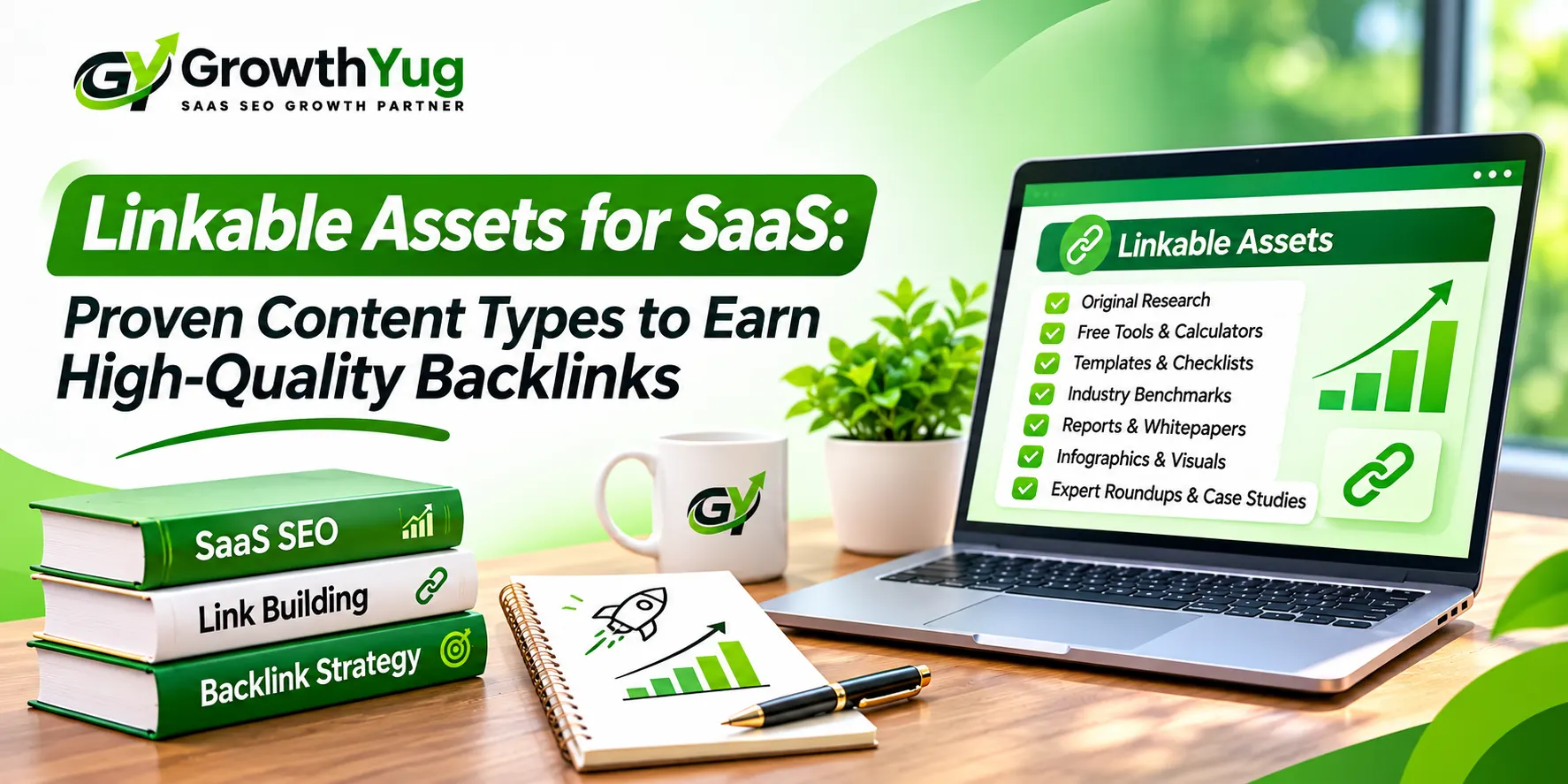
Some common examples of SaaS linkable assets include:
- Original research and industry surveys.
- Free tools and interactive calculators.
- Downloadable templates and checklists.
- Industry benchmarks and statistics.
- Comprehensive reports and whitepapers.
- Infographics and interactive visualizations.
- Expert roundups and detailed case studies.
The key is to create something that provides value beyond what is already available online.
Why Are Linkable Assets Important for SaaS Link Building?
SaaS companies operate in competitive industries where organic search visibility and brand credibility directly influence customer acquisition.
Creating link-worthy content helps businesses attract relevant backlinks while supporting their broader digital marketing objectives.
Here are some major benefits.
1. Earn High-Quality Editorial Backlinks
When your website publishes original information or useful resources, other publishers have a reason to reference it.
For example, an original SaaS industry study could attract links from marketing blogs, technology publications, and business websites.
These editorial backlinks can support your website’s authority and organic visibility.
2. Strengthen Your SaaS SEO Strategy
Backlinks are an important part of off-page SEO. Relevant links from credible websites can help search engines discover your pages and evaluate their authority.
Combining linkable assets with technical SEO, quality content, and effective internal linking creates a more complete SaaS SEO strategy.
3. Generate Consistent Referral Traffic
A backlink does more than contribute to your backlink profile. It can also introduce your brand to readers who are already interested in your industry.
Visitors arriving through relevant publications may explore your services, subscribe to your newsletter, or become potential customers.
4. Build Brand Recognition and Industry Authority
Original research, practical tools, and industry reports help position your SaaS business as a knowledgeable resource.
When other professionals repeatedly reference your research, your brand becomes more recognizable within your industry.
5. Support Long-Term Organic Growth
A useful resource can continue earning backlinks months or even years after publication.
Although no asset guarantees automatic backlinks, evergreen resources with ongoing value can become long-term contributors to your organic growth strategy.
7 Types of Linkable Assets That SaaS Companies Should Create
Not all content attracts backlinks equally. The most successful linkable assets provide original information, solve specific problems, or help readers complete tasks more efficiently.
Here are seven content types worth investing in.
1. Original Research and Industry Studies
Original research is one of the strongest ways to create link-worthy content.
Journalists, bloggers, researchers, and industry professionals regularly search for unique statistics and findings to support their articles. When your SaaS company publishes original research, you provide information that other websites can reference.
For example, a SaaS marketing company could conduct a study on:
- SaaS customer acquisition costs.
- Average customer retention rates.
- B2B software adoption trends.
- Marketing automation performance.
- SaaS customer churn statistics.
- Organic traffic growth across industries.
- Link-building trends among SaaS companies.
A report titled “The State of SaaS Link Building in 2026” could include survey responses, original findings, charts, and expert commentary.
Other SEO publications may reference individual statistics when discussing backlink strategies or SaaS marketing performance.
How to create original research that earns backlinks:
- Identify an important question in your industry.
- Collect first-party data through surveys, interviews, or product research.
- Analyze the findings and identify useful patterns.
- Present results through statistics, charts, and comparisons.
- Explain your research methodology.
- Publish the findings in an accessible format.
- Update the study when meaningful new data becomes available.
Pro Tip: Make important findings easy to quote. Publishers are more likely to reference research when individual statistics are clearly presented with methodology and attribution.
2. Free Tools and Interactive Calculators
Free tools are highly effective linkable assets because they provide immediate practical value.
Instead of simply explaining how to perform a task, an interactive tool helps visitors complete it.
SaaS businesses can develop free resources such as:
- Backlink ROI calculators.
- Keyword difficulty checkers.
- SEO audit tools.
- Website traffic estimators.
- SaaS customer lifetime value calculators.
- Customer acquisition cost calculators.
- Marketing budget planners.
- Backlink profile analysis tools.
For GrowthYug, a free backlink ROI calculator could help SaaS companies estimate the potential return from their link-building campaigns.
Other marketing blogs may reference the calculator when explaining SEO budgets, backlink acquisition, or link-building performance.
How to create an effective free tool:
- Identify a repetitive or difficult task.
- Focus on solving one specific problem.
- Create a simple and accessible interface.
- Provide accurate results and clear explanations.
- Include useful recommendations alongside the results.
- Make the tool shareable.
- Keep its functionality updated.
Free tools can also support lead generation through optional advanced features, downloadable reports, and additional resources.
3. Downloadable Templates and Backlink Audit Checklists
Templates and checklists help users save time and complete complicated tasks more efficiently.
They are particularly useful for SaaS marketing teams, SEO professionals, agencies, and business owners.
Some valuable downloadable resources include:
- SaaS SEO strategy templates.
- Backlink audit checklists.
- Link-building outreach templates.
- Competitor backlink analysis spreadsheets.
- Backlink monitoring spreadsheets.
- SEO reporting templates.
- Content marketing calendars.
- Guest posting research templates.
- Link reclamation trackers.
For example, GrowthYug could publish a downloadable backlink audit checklist that helps marketing professionals evaluate their backlink profiles, identify broken links, review anchor text, and monitor potentially harmful backlinks.
A practical checklist is particularly linkable because other websites can recommend it as a resource when explaining backlink audits.
What should a backlink audit checklist include?
A useful backlink audit should cover the following areas:
Backlink Profile Analysis
- Identify the total number of backlinks.
- Review the number of referring domains.
- Identify new and lost backlinks.
- Evaluate the relevance of linking websites.
- Check whether backlinks point to important pages.
Link Quality Assessment
- Review the topical relevance of referring domains.
- Examine the editorial context of backlinks.
- Identify suspicious link patterns.
- Review site quality and credibility.
- Check for unnatural paid or manipulative links.
Anchor Text Analysis
- Identify branded anchor text.
- Review exact-match keyword anchors.
- Check partial-match and generic anchors.
- Look for unusually repetitive anchor text.
- Investigate potentially manipulative patterns.
Technical Backlink Checks
- Identify broken backlinks.
- Check redirected destination URLs.
- Review 404 pages receiving backlinks.
- Identify HTTP and HTTPS inconsistencies.
- Check whether important pages are accessible and indexable.
Competitor Analysis
- Identify competitor referring domains.
- Discover relevant websites linking to competitors.
- Find content attracting the most backlinks.
- Identify potential industry resource pages.
- Discover editorial link-building opportunities.
Recovery and Improvement
- Recover valuable lost backlinks.
- Fix broken destination pages.
- Contact relevant publishers when appropriate.
- Update outdated content.
- Monitor backlink changes regularly.
A downloadable checklist can become an evergreen resource that attracts links while helping visitors understand the importance of regular backlink audits.
4. Industry Benchmarks and SaaS Statistics
Industry benchmarks help companies compare their performance with relevant market standards.
SaaS founders, investors, marketing managers, and business analysts frequently search for reliable statistics when evaluating business performance.
You can create benchmark resources covering:
- Average SaaS conversion rates.
- Customer acquisition cost benchmarks.
- SaaS customer churn rates.
- Monthly recurring revenue growth.
- SaaS email marketing performance.
- Customer lifetime value.
- Organic traffic growth.
- SaaS backlink acquisition trends.
For example, a report titled “SaaS SEO Benchmarks: Organic Growth and Backlink Trends in 2026” could include segmented data and practical insights.
Tips for creating valuable benchmark content:
- Use reliable first-party or properly attributed third-party data.
- Divide results by industry, company size, or business stage.
- Include charts and comparison tables.
- Explain how the data was collected.
- Highlight important trends.
- Provide actionable recommendations.
Always distinguish between original findings and external industry statistics. Transparent data sources make your research more credible.
5. Comprehensive Industry Reports and Whitepapers
Industry reports and whitepapers provide detailed information about important market developments, challenges, and opportunities.
They are especially useful for B2B SaaS businesses targeting decision-makers and industry professionals.
Some effective report ideas include:
- The Complete State of SaaS SEO in 2026.
- SaaS Link-Building Trends and Strategies.
- The Future of AI Search and Organic Visibility.
- SaaS Content Marketing Performance Report.
- B2B SaaS Organic Growth Research.
- The Evolution of Editorial Link Building.
A valuable report should include an executive summary, original research, expert insights, relevant statistics, visual data, and actionable recommendations.
Consider publishing an HTML version alongside a downloadable PDF. This allows search engines and readers to access the content easily.
Reports can also support digital PR, expert contributions, and broader SaaS content marketing campaigns.
6. Interactive Data Visualizations and Infographics
Visual assets make complex information easier to understand.
An infographic can transform a complicated process into an accessible visual explanation, while interactive charts can help visitors explore information themselves.
SaaS companies can create visual assets around:
- SaaS customer acquisition funnels.
- Backlink audit processes.
- Link-building campaign workflows.
- SEO performance comparisons.
- Customer retention trends.
- SaaS growth statistics.
- Content marketing strategies.
For example, GrowthYug could publish an infographic explaining the complete SaaS backlink audit process, from identifying referring domains to monitoring lost links.
Best practices for creating link-worthy visuals:
- Focus on one topic per visual.
- Use accurate and verifiable data.
- Keep the design clean and readable.
- Include relevant source citations.
- Add appropriate brand attribution.
- Provide an embed option where useful.
- Publish supporting text explaining the visualization.
Remember, an infographic should communicate useful information rather than simply decorate a blog post.
7. Expert Roundups and Real-World Case Studies
Expert roundups and case studies provide insights that generic articles cannot easily reproduce.
They combine professional experience, practical knowledge, and real-world examples to help readers understand how strategies work.
Potential topics include:
- SaaS SEO Experts Share Their Best Link-Building Strategies.
- How SaaS Companies Build Organic Authority.
- Real-World SaaS Backlink Audit Case Studies.
- Successful SaaS Content Marketing Campaigns.
- How Companies Recover Lost Backlinks.
- Expert Predictions for SaaS SEO in 2027.
For example, a detailed case study could explain how a SaaS business identified lost backlinks, recovered valuable referring domains, improved internal linking, and strengthened its organic visibility.
How to develop expert-led linkable content:
- Select a relevant industry topic.
- Identify professionals with genuine experience.
- Ask specific questions.
- Collect detailed insights and examples.
- Include verifiable supporting information.
- Organize responses into a comprehensive resource.
- Credit contributors accurately.
Real results, transparent methodology, and useful recommendations make case studies more valuable and trustworthy.
How to Combine Linkable Assets With a SaaS Backlink Audit
Creating linkable assets helps attract backlinks, but SaaS companies also need to evaluate their existing backlink profiles.
A backlink audit identifies which websites link to your business, how those links contribute to your SEO strategy, and where potential problems or opportunities exist.
For example, you might publish an original research report and attract backlinks from several industry publications. A backlink audit can help you evaluate those links, identify their destination pages, and understand which assets are attracting the most attention.
A complete SaaS backlink audit should include:
1. Review Your Existing Backlink Profile
Start by identifying all known backlinks pointing to your website.
Evaluate:
- Total backlinks.
- Referring domains.
- Linking page URLs.
- Target destination pages.
- New and lost backlinks.
- Follow and nofollow attributes.
2. Analyze Referring Domain Quality
Look beyond the total number of links.
Evaluate the topical relevance, credibility, editorial context, and overall quality of the referring websites.
Third-party metrics such as Domain Rating and Domain Authority can provide additional context, but they should not be treated as direct Google ranking factors.
3. Check Anchor Text Distribution
Review the anchor text used by websites linking to your SaaS business.
Look for branded, generic, partial-match, and exact-match anchors.
Investigate unusually repetitive or manipulative patterns rather than assuming that every keyword-rich anchor is harmful.
4. Identify Lost and Broken Backlinks
Some backlinks disappear because publishers update their articles, remove pages, change URLs, or restructure their websites.
Identify valuable lost links and investigate whether they can be recovered.
You should also check whether important pages are returning 404 errors or redirecting visitors to irrelevant destinations.
5. Analyze Competitor Backlinks
Competitor backlink analysis helps uncover websites that already link to businesses in your industry.
These referring domains may represent opportunities for:
- Industry research references.
- Resource page placements.
- Expert contributions.
- Guest articles.
- Relevant editorial mentions.
6. Identify Opportunities for Link Reclamation
Check whether websites mention your SaaS brand without linking to your website.
You can also identify broken links pointing to previously published resources.
Where appropriate, contact the publisher with the correct URL or a useful replacement resource.
For a complete walkthrough, read our guide to SaaS Backlink Audit: How to Find Link Building Opportunities.
Why Backlink Monitoring Is Important for Linkable Assets
A successful linkable asset campaign does not end after publication.
Backlink monitoring helps you understand how your content performs over time and whether your website continues receiving valuable backlinks.
For SaaS businesses, regular backlink monitoring is important because links can be acquired, modified, redirected, or removed.
Here are the key activities to include.
Monitor New and Lost Backlinks
Track newly acquired backlinks and identify links that have disappeared.
If a high-quality website removes a backlink to your research report, investigate why it happened and whether the link can be restored.
Track Referring Domains
Monitor unique websites linking to your assets.
A growing number of relevant referring domains can indicate that your resources are gaining recognition.
Review Anchor Text Changes
Check whether publishers have modified the anchor text pointing to your pages.
This helps you understand how your brand and content are being referenced.
Monitor Broken Backlinks
If your website changes URLs or removes older content, existing backlinks may point to broken pages.
Set up appropriate redirects when a replacement page genuinely matches the original content, or restore the resource when appropriate.
Identify New Link-Building Opportunities
Monitoring competitor backlinks and industry publications can reveal new opportunities to create resources that attract relevant links.
If you want to compare the leading platforms for tracking backlinks, read Backlink Monitoring Tools Compared: Ahrefs vs. Semrush vs. Moz vs. Free Tools.
Best Practices for Promoting Linkable Assets Without Relying Entirely on Outreach
Although linkable assets are designed to earn natural backlinks, initial promotion helps the right people discover them.
Here are practical ways to increase visibility.
Publish Supporting SEO Content
Create educational articles around the problems your resource solves.
For example, if you publish a Backlink Monitoring Checklist, create supporting content about backlink analysis, lost backlink recovery, and backlink monitoring.
Link naturally between relevant resources.
Share Resources on LinkedIn
Share original research, useful statistics, free tools, and downloadable resources with relevant professional communities.
Focus on useful information rather than publishing promotional messages without context.
Use Email Marketing
Share new resources with your existing subscribers.
A valuable research report or calculator may encourage readers to share it with colleagues or reference it in their own publications.
Participate in Relevant Industry Communities
Contribute useful insights to SaaS communities, marketing discussions, and SEO forums.
When appropriate, reference your resources as additional reading.
Repurpose Your Content
Transform research reports into smaller articles, visual statistics, social media posts, and presentations.
This increases the number of ways your target audience can discover your work.
Keep Your Assets Updated
Review important resources regularly.
Update outdated statistics, improve calculator functionality, fix broken downloads, and add new information when industry conditions change.
How to Measure the Performance of SaaS Linkable Assets
To understand whether your linkable assets are successful, track both SEO performance and business outcomes.
| Performance metric | What it tells you |
|---|---|
| Referring domains | Number of unique websites linking to your content |
| Backlink quality | Relevance and credibility of acquired links |
| New backlinks | Recently discovered backlinks |
| Lost backlinks | Links that have disappeared |
| Organic traffic | Search visitors reaching your assets |
| Referral traffic | Visitors arriving from external websites |
| Keyword rankings | Visibility for relevant search queries |
| Brand mentions | How frequently your business is referenced |
| Conversions | Leads, sign-ups, and other valuable actions |
Useful SEO Tools include Google Search Console, Google Analytics, Ahrefs, Semrush, and Moz.
Evaluate performance over time instead of relying on a single metric. A resource that earns fewer but highly relevant editorial backlinks may provide more strategic value than one attracting numerous unrelated links.
Common Mistakes to Avoid When Creating Linkable Assets
Even valuable resources may struggle to attract backlinks when they are poorly planned or promoted.
Avoid these common mistakes:
Creating generic content: Rewriting existing articles without original information gives publishers little reason to reference your resource.
Ignoring audience needs: Your asset should address a specific problem or information gap.
Publishing unsupported statistics: Every research finding should have a credible source or transparent methodology.
Focusing only on backlink numbers: Relevance, context, and quality matter more than simply accumulating links.
Ignoring backlink monitoring: Without regular monitoring, you may miss valuable lost links or technical problems.
Neglecting internal linking: Connect your linkable assets to related educational articles and relevant service pages.
Forgetting content updates: Outdated information can reduce the usefulness and credibility of your resources.
Making resources difficult to access: Broken tools, complicated downloads, and unnecessary registration requirements can discourage users from sharing your assets.
How Linkable Assets Fit Into a Complete SaaS SEO Strategy
Linkable assets should work alongside other SEO and link-building activities rather than replacing them.
A comprehensive SaaS SEO strategy can combine:
SaaS Content Marketing: Develop educational content that attracts relevant audiences, addresses search intent, and supports your linkable assets.
SaaS Link Building: Build relevant backlinks through a combination of original resources, editorial opportunities, and industry relationships.
Editorial Link Building: Earn contextual mentions from relevant publications and authoritative industry websites.
Guest Posting: Share valuable industry insights through relevant external publications.
Backlink Audits: Regularly evaluate the quality, relevance, and performance of your backlink profile.
Backlink Monitoring: Track new and lost links, referring domains, and changes to existing backlinks.
Link Reclamation: Recover valuable backlinks lost through broken URLs, website migrations, or removed content.
When these strategies work together, SaaS businesses can create a sustainable approach to building brand authority and improving organic search visibility.
Final Thoughts
Linkable assets are an important part of building a sustainable SaaS backlink strategy. Instead of depending entirely on traditional outreach, companies can create resources that provide genuine value and encourage other websites to reference their work.
From original research and interactive calculators to downloadable templates, industry benchmarks, comprehensive reports, visualizations, and expert case studies, each asset offers a different opportunity to attract relevant backlinks.
However, creating link-worthy content is only one part of the process. SaaS businesses should also maintain a regular backlink audit checklist, monitor newly acquired and lost backlinks, evaluate referring domain quality, and identify opportunities to recover valuable links.
Combine linkable assets with SaaS content marketing, editorial link building, backlink monitoring, and ongoing SEO improvements to develop a stronger digital presence.
Ready to strengthen your SaaS backlink profile?
Explore GrowthYug’s SaaS link-building solutions and build a sustainable strategy focused on relevant backlinks, brand authority, and long-term organic growth.
Frequently Asked Questions About Linkable Assets for SaaS
1. What are linkable assets in SaaS SEO?
Linkable assets are valuable digital resources created to attract backlinks naturally. Examples include original research, free tools, industry reports, downloadable templates, infographics, and case studies.
2. Why are linkable assets important for SaaS companies?
Linkable assets help SaaS companies earn relevant backlinks, improve brand visibility, attract referral traffic, establish industry authority, and support long-term organic growth.
3. What type of content attracts the most backlinks?
Original research, free interactive tools, industry statistics, comprehensive reports, and useful templates can attract significant backlinks because they provide information or functionality that other publishers want to reference.
However, performance depends on the topic, audience demand, content quality, and distribution.
4. How do SaaS companies earn backlinks naturally?
SaaS companies can earn natural backlinks by publishing original research, creating useful free tools, developing industry reports, sharing expert insights, and offering practical resources that other websites find valuable.
5. What is a backlink audit checklist?
A backlink audit checklist is a structured list of activities used to evaluate a website’s backlink profile. It typically includes reviewing referring domains, backlink quality, anchor text, broken links, lost backlinks, competitor links, and potential link-building opportunities.
6. How often should SaaS companies perform a backlink audit?
The frequency depends on website size, backlink acquisition activity, and SEO risks. Many SaaS companies benefit from a comprehensive audit every quarter, alongside regular monitoring of important backlink changes.
Large websites or businesses running active link-building campaigns may need more frequent reviews.
7. What is the difference between backlink monitoring and backlink auditing?
A backlink audit is a detailed evaluation of your existing backlink profile to identify opportunities, technical issues, and potential risks.
Backlink monitoring is the ongoing process of tracking new, lost, and changed backlinks over time.
Both activities are important for maintaining a healthy and effective SaaS backlink strategy.
8. Which tools are best for backlink monitoring?
Popular backlink monitoring platforms include Ahrefs, Semrush, Moz, and Google Search Console.
Each platform offers different backlink discovery, analysis, and reporting capabilities. The best option depends on your budget, website requirements, and monitoring needs.
9. How can I identify lost backlinks?
Use backlink analysis platforms to identify links that were previously discovered but are no longer present. Review the original linking page, check whether your destination URL works, and investigate whether the publisher removed or changed the link.
If the backlink is valuable, you can contact the publisher with a relevant correction or replacement suggestion.
10. Can free tools attract backlinks for SaaS websites?
Yes. Free tools can attract backlinks when they solve genuine problems and provide functionality that users find useful. Examples include SEO calculators, backlink checkers, keyword research tools, and marketing budget calculators.
11. Do linkable assets replace guest posting and traditional link building?
No. Linkable assets complement traditional link-building activities. Guest posting, digital PR, editorial placements, and relevant industry contributions can help expand your backlink profile while your resources continue attracting organic references.
12. How long does it take for linkable assets to earn backlinks?
There is no fixed timeline. Some resources may attract backlinks shortly after publication, while others require several months of visibility, promotion, and industry recognition. Originality, usefulness, competition, and audience demand all influence the results.
13. Are all backlinks valuable for SaaS SEO?
No. Backlinks should be evaluated based on relevance, editorial context, credibility, and quality. A large number of unrelated or manipulative links does not necessarily improve SEO performance. Focus on earning genuine, relevant links rather than pursuing backlink quantity alone.
14. How do linkable assets support SaaS content marketing?
Linkable assets give SaaS content marketing strategies valuable resources to promote and reference. Research reports, templates, calculators, and industry statistics can support blog articles, social media campaigns, email marketing, and digital PR.
15. What is the best way to measure linkable asset performance?
Monitor referring domains, backlink quality, new and lost links, organic traffic, referral traffic, keyword rankings, brand mentions, and conversions. Combining these metrics provides a more complete picture of your asset’s performance.
Read More Posts :
Backlink Monitoring vs. Backlink Analysis: What’s the Difference?
Step-by-Step SaaS Link Building Strategy for Beginners
SaaS Content Marketing Strategies That Work
What Is a Backlink Database and How Does It Work?
Manual Link Building Techniques That Still Work in 2026
AI and Link Building: What SaaS Marketers Need to Know in 2026
Why Are Your Backlinks Not Getting Indexed? Causes, Checks, and Fixes