
Editorial Backlinks vs. Guest Posts: Which Is Better for SaaS SEO?
Building high-quality backlinks is an important part of SaaS SEO. Relevant backlinks can help potential customers discover your content, strengthen your website’s credibility, and support your organic search strategy. However, not all link-building methods work in the same way.
Two popular approaches are editorial backlinks and guest posts. Both can help SaaS companies earn relevant links, but they differ in how links are acquired, how content is published, and how campaigns are managed.
Editorial backlinks typically occur when a publisher references a resource, research report, or expert insight because it adds value to an article. Guest posting involves contributing content to another website, often creating an opportunity to reference relevant resources on your own website.
So, which approach should SaaS businesses prioritize? Should you work with a guest post outreach agency, invest in editorial link building, or combine both methods?
In this guide, we’ll compare editorial backlinks and guest posts, explain whether guest posting still works, explore effective outreach strategies, and show you how to choose the right SaaS link-building partner.
What Are Editorial Backlinks?
Editorial backlinks are links that publishers include in their content because they consider a resource, source, or contribution useful for their readers.
These links may point to original research, expert commentary, industry reports, educational guides, or other relevant resources.
For example, a SaaS company publishes a research report about marketing automation trends. An industry publication later references the report in an article about marketing technology and links to the original research. This is an example of an editorial backlink.
Editorial links are valuable opportunities because the reference can help readers discover useful information beyond the original article.
Benefits of Editorial Backlinks for SaaS SEO
1. Relevant industry exposure
A link from a publication that covers your industry can introduce your brand to readers who may be interested in your product or expertise.
2. Support for content discovery
Editorial references can help readers find research, guides, and resources that answer their questions.
3. Opportunities to demonstrate expertise
Original data, expert commentary, and useful resources can give publishers a reason to reference your business.
4. Long-term referral opportunities
A useful article may continue attracting readers and referral visits while it remains accessible and relevant.
5. Natural contextual references
When a link genuinely supports an article, it helps readers explore the subject in greater depth.
Challenges of Editorial Link Building
Editorial backlinks are not always easy to earn. Publishers decide independently whether your resource deserves a reference, and there is no guarantee that outreach will result in a placement.
Common challenges include:
- Creating original resources that stand out.
- Identifying relevant publishers and journalists.
- Developing a compelling reason for a publisher to reference your content.
- Building relationships with industry publications.
- Waiting for editorial decisions and publication schedules.
For SaaS companies, editorial link building works best when content provides clear value beyond promoting a product.
What Are Guest Posts?
Guest posting involves contributing an article to another website. The article may explain an industry topic, provide expert insights, or help the publication’s audience solve a problem.
A guest post may include a relevant link to your website when the publisher’s guidelines permit it and the reference benefits readers.
For example, a SaaS company specializing in project management could contribute an article about improving remote team workflows to a relevant business publication. The article might reference a useful guide on the company’s website.
Guest posting can support content distribution, professional visibility, referral traffic, and link acquisition when executed thoughtfully.
Benefits of Guest Posting for SaaS Businesses
1. Greater control over topic selection
You can propose topics related to your expertise, audience, and product category.
2. Opportunities to reach new audiences
Publishing on relevant external websites introduces your ideas to readers who may not know your brand.
3. Expert positioning
Well-researched contributions can demonstrate your team’s knowledge of a specific industry or problem.
4. Scalable outreach opportunities
A structured guest post outreach strategy can help you identify suitable publications and manage multiple opportunities.
5. Content-led relationship building
Working with editors and publishers can create opportunities for future contributions and industry exposure.
Challenges of Guest Posting
Guest posting requires research, content development, outreach, editing, and coordination with publishers.
Potential challenges include:
- Finding websites with relevant audiences and genuine editorial standards.
- Creating original articles that meet publication guidelines.
- Managing outreach responses and follow-ups.
- Avoiding websites that publish large volumes of low-quality content primarily to sell links.
- Ensuring that paid placements are handled transparently and links use appropriate attributes.
Guest posting should not become a process of publishing generic articles solely to acquire backlinks. The article must provide real value to its intended audience.
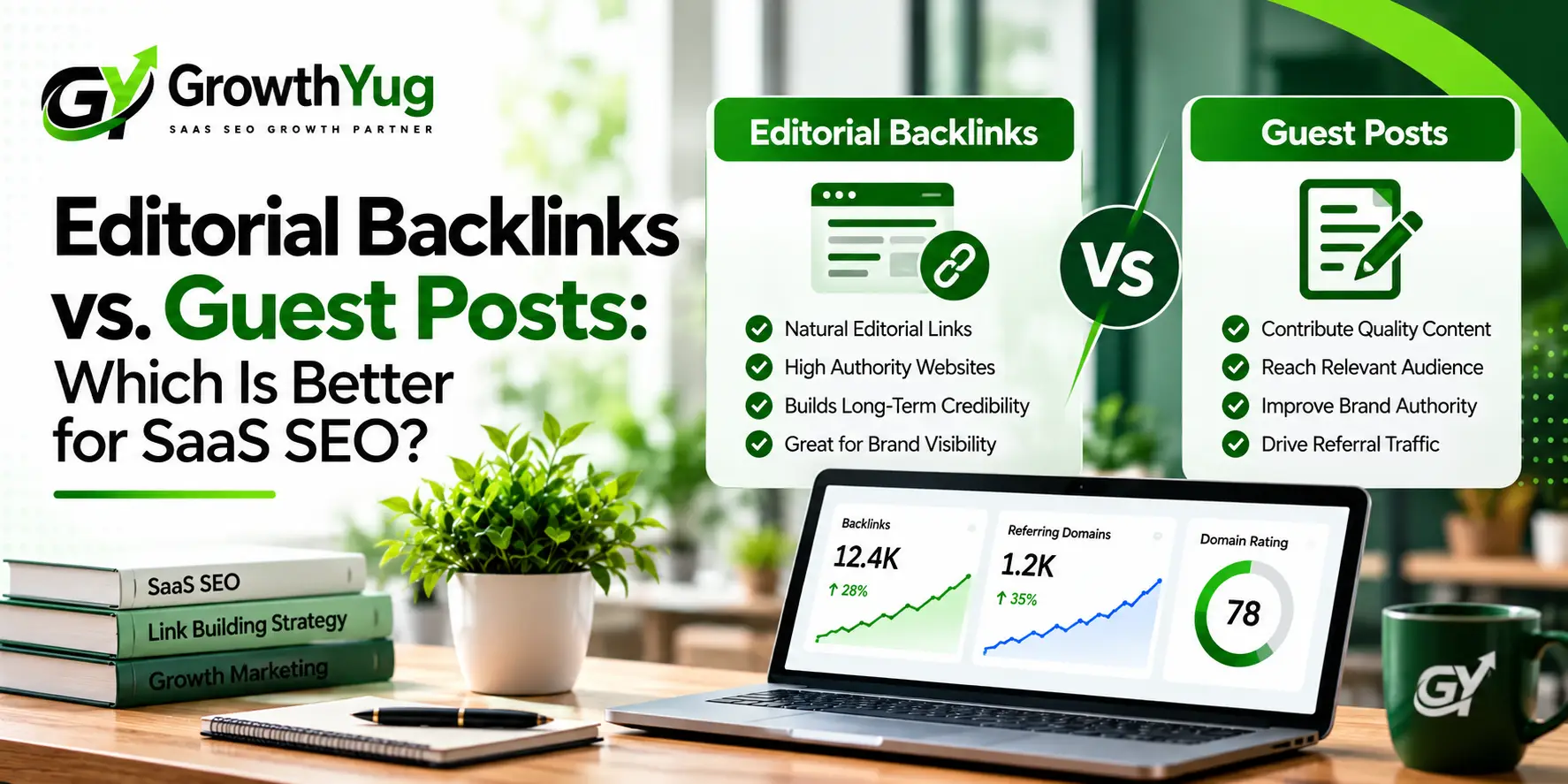
Editorial Backlinks vs. Guest Posts: Key Differences
Both methods can support SaaS SEO, but they differ in their typical workflows and opportunities.
| Factor | Editorial Backlinks | Guest Posts |
|---|---|---|
| How links are earned | A publisher references a useful resource or contribution | A publisher accepts an article from a guest contributor |
| Content ownership | Usually the publisher’s existing article or independently developed content | Article is developed for an external publication |
| Main requirement | A compelling resource, insight, or editorial reason to link | A relevant topic and useful article that meets editorial standards |
| Outreach approach | Pitch research, expertise, resources, or story ideas | Pitch article ideas and contribute content |
| Content control | The publisher controls the final reference and wording | The publisher controls editing, acceptance, and publication |
| Typical use cases | Research promotion, digital PR, expert references | Educational contributions, thought leadership, specialist articles |
| Potential benefit | Editorial discovery and relevant referral opportunities | Audience exposure, expert visibility, and contextual references |
| Main challenge | Earning editorial interest and securing a reference | Producing useful content and finding suitable publishing opportunities |
These are general distinctions, not absolute rules. Guest contributions can earn genuine editorial references, and editorial backlinks can arise from many activities beyond original research.
The most important question is not simply which tactic is better. It is whether the resulting placement is relevant, useful, transparent, and appropriate for your SaaS brand.
Editorial Backlinks vs. Guest Posts: Which Is Better for SaaS SEO?
There is no universal winner. The right choice depends on your content resources, industry, outreach capacity, and campaign objectives.
Choose Editorial Backlinks When You Have Valuable Resources
Editorial link building can be a strong fit when your SaaS company has something publishers would genuinely want to reference.
Examples include:
- Original industry research.
- Unique data and benchmark reports.
- Expert commentary.
- Detailed technical documentation.
- Useful calculators and free tools.
- Comprehensive educational resources.
- Original case studies with clearly explained findings.
If your team can produce credible research or offer specialist expertise, editorial outreach may help you earn relevant references without relying exclusively on guest contributions.
Choose Guest Posts When You Want to Share Expertise
Guest posting may be useful when your team has subject-matter expertise and can create articles that serve relevant external audiences.
It can help SaaS companies:
- Explain industry challenges.
- Share practical implementation advice.
- Reach audiences on relevant specialist websites.
- Develop relationships with editors.
- Promote useful resources through appropriate contextual references.
Guest posting is not automatically easier or cheaper than editorial link building. The effort depends on the publication, article requirements, outreach process, and quality standards.
Use Both Methods for a Balanced Strategy
For many SaaS companies, a combination of editorial backlinks and guest posting is more practical than relying on a single method.
For example, a company might publish an original research report and pitch it to relevant industry publications. At the same time, its experts could contribute educational guest articles to websites serving the same audience.
The research campaign focuses on earning editorial references, while guest contributions expand the company’s reach and demonstrate expertise.
Both activities should support the same broader content and SEO strategy.
Does Guest Posting Still Work in 2026?
Yes, guest posting can still be useful when it focuses on relevant audiences, original content, and genuine editorial value. However, publishing guest posts simply to manipulate search rankings is a different practice.
Google’s spam policies identify certain link-building practices, including buying links for ranking purposes and large-scale article campaigns with keyword-rich links, as potential link spam.
That distinction matters for SaaS companies evaluating guest post outreach services.
What Makes Guest Posting Effective?
Relevant publications: Choose websites that cover your industry or reach an audience that could benefit from your expertise.
Original content: Provide practical insights, credible examples, or useful explanations rather than rewriting existing articles.
Natural references: Include links when they genuinely support the reader’s understanding of the subject.
Editorial quality: Follow the publisher’s standards and allow appropriate editing.
Transparent commercial relationships: If a placement is sponsored or paid, disclose the relationship where required and qualify the link appropriately.
Google recommends using rel="sponsored" for paid placements. The nofollow attribute is also acceptable.
What Should You Avoid?
Avoid guest posting campaigns built around:
- Publishing generic articles on unrelated websites.
- Repeating exact-match commercial anchor text across many placements.
- Paying for links intended to pass ranking credit without appropriate qualification.
- Automated mass outreach that ignores publisher relevance.
- Prioritizing domain metrics over audience and editorial quality.
Guest posting should contribute to a broader marketing strategy rather than serve as a shortcut to rankings.
How to Build an Effective Guest Post Outreach Strategy
A structured guest post outreach strategy can help SaaS businesses identify suitable publishers, pitch relevant topics, and manage publication opportunities efficiently.
Step 1: Define Your Target Audience
Start by identifying the people your SaaS product serves.
For example, a CRM platform might target sales leaders, revenue operations teams, and business owners. A cybersecurity platform may target IT professionals, security leaders, and technical decision-makers.
This information helps you identify publications and topics that match your audience.
Step 2: Find Relevant Websites
Build a list of publications that cover your industry, related topics, or audience interests.
Evaluate each website based on:
- Topical relevance.
- Editorial quality.
- Audience fit.
- Content freshness.
- Existing search visibility, where relevant.
- Submission guidelines and publication standards.
Do not rely exclusively on Domain Rating, Domain Authority, or similar third-party metrics.
Step 3: Research Each Publication
Review recently published articles to understand the website’s preferred topics, content structure, and audience needs.
Identify gaps that your expertise could fill. Avoid pitching topics the publication has already covered extensively unless you have a genuinely different perspective.
Step 4: Create Personalized Pitches
Explain why your proposed article fits the publication and what readers will learn.
A strong pitch is concise, relevant, and specific. It should demonstrate that you understand the publication rather than sending a generic request for a backlink.
Step 5: Produce Useful Content
Develop original articles that follow the publication’s requirements.
Use accurate information, clear examples, and practical takeaways. Include references to your website only when they improve the article and are permitted by the publisher.
Step 6: Track Outreach and Placements
Maintain a record of:
- Target website and contact.
- Proposed topic.
- Outreach date and follow-up status.
- Editorial approval.
- Published URL.
- Destination URL and anchor text.
- Link attributes.
- Placement cost, if applicable.
- Link status over time.
This process helps you measure performance and identify which types of publications and topics work best for your business.
How a Guest Post Outreach Agency Can Help
A guest post outreach agency helps businesses manage some or all of the process of identifying publications, contacting editors, coordinating content, and securing accepted guest contributions.
For SaaS companies with limited internal resources, an agency can help organize outreach activities and support a consistent publishing workflow.
However, agency services vary. Some providers handle only publisher outreach, while others also offer content writing, prospect research, placement review, and reporting.
What to Look for in a Guest Post Outreach Service
Relevant publisher selection: The provider should explain why each publication fits your business and audience.
Content quality: Ask who writes the articles and how they are reviewed for originality, accuracy, and brand consistency.
Transparent pricing: Confirm whether writing, outreach, publication fees, and reporting are included.
Clear placement criteria: Agree on the requirements a website must meet before a placement is accepted.
Reliable reporting: Request published URLs, destination pages, link attributes, and placement status.
Realistic expectations: Be cautious of guaranteed rankings or promises of SEO results based solely on link counts.
A professional service should make its process clear and help you evaluate the quality of the work rather than focusing exclusively on the number of links delivered.
Editorial Link Building vs. Guest Post Outreach: Cost Factors
The cost of acquiring backlinks depends on the work involved, the publication, the content requirements, and the campaign scope.
Editorial link building may involve research development, digital PR, expert interviews, and publisher outreach. Guest posting may involve prospect research, article writing, editing, outreach, and publication coordination.
Neither method is always cheaper.
Factors That Affect Pricing
| Cost factor | Editorial Backlinks | Guest Posts |
|---|---|---|
| Content development | Research, original data, expert commentary | Article research, writing, and editing |
| Outreach | Journalist and editor pitches | Guest article pitches and follow-ups |
| Publication requirements | Depends on editorial interest and story fit | Depends on guidelines and editorial review |
| Campaign complexity | Can be high for original research or PR campaigns | Varies with content volume and publisher requirements |
| Additional costs | Research, design, data analysis, or PR support | Writing, editing, or disclosed publication fees |
When comparing proposals, ask for a clear breakdown of services, deliverables, and any additional expenses.
Do not choose a provider solely because it offers the lowest price per link. A placement should be evaluated based on its relevance, content quality, editorial standards, and potential value to your audience.
For available package options, visit GrowthYug’s Link Building Packages and Pricing.
How to Use a Backlink Database for Link-Building Research
A backlink database is a collection of backlink information used to research referring domains, linking pages, anchor text, and other link-profile details.
SEO platforms such as Ahrefs, Semrush, and Majestic maintain backlink datasets that can help marketers investigate their own websites and competitors.
These databases are useful for identifying potential publishers, discovering content that attracts links, and reviewing changes in a backlink profile. However, each platform has its own coverage, update frequency, and reporting methods.
Ways to Use a Backlink Database
1. Find competitor link sources
Review the websites linking to competing SaaS companies and identify publishers that cover your industry.
2. Discover linkable content
Identify competitor pages that attract backlinks and determine whether your business can create a more useful or distinctive resource.
3. Identify potential outreach prospects
Find relevant publications, resource pages, and articles where your expertise could add value.
4. Review existing backlinks
Analyze your own referring domains and destination pages to understand which resources already attract links.
5. Support ongoing monitoring
Compare backlink reports over time to identify newly discovered or lost links.
Remember that backlink databases are not complete records of every link on the internet. Use their data as a research resource rather than treating any one platform as the definitive source of backlink information.
How Backlink Monitoring Tools Support Your Campaign
Backlink monitoring tools help you track changes in your backlink profile over time.
While editorial link building and guest posting focus on earning placements, monitoring helps you understand whether acquired links remain live and whether your backlink profile is changing.
Popular options include Ahrefs, Semrush, SE Ranking, and Majestic. Google Search Console also provides a Links report that can help website owners review examples of links Google has identified.
What Should You Monitor?
- Newly discovered backlinks.
- Lost backlinks.
- Referring domains.
- Destination pages.
- Anchor text and link attributes.
- Changes affecting important editorial placements.
- Referral traffic and relevant page performance.
Different tools offer different features and update frequencies, so compare their capabilities before choosing a platform.
Monitoring does not directly improve rankings by itself. Its value lies in helping you identify changes, investigate issues, and make informed decisions about your SEO campaigns.
How to Conduct a Backlink Audit Before Scaling Link Building
A backlink audit helps you review your website’s existing backlink profile before investing more resources in outreach.
It can reveal valuable links, lost placements, potential outreach opportunities, and patterns that require further investigation.
Step 1: Collect Backlink Data
Use a backlink research platform and, where useful, Google Search Console to gather information about known backlinks and referring domains.
Step 2: Review Referring Domains
Evaluate each domain’s relevance, audience, editorial standards, and the context of its links.
Avoid judging every link using a single authority score.
Step 3: Identify New and Lost Links
Investigate important links that have appeared or disappeared. If a valuable link is lost, check whether the original page still exists and whether a correction or update may restore it.
Step 4: Review Anchor Text and Destination Pages
Check whether links point to relevant pages and whether anchor text reads naturally within the surrounding content.
Investigate unusual patterns in context rather than assuming every repeated anchor or unfamiliar domain is harmful.
Step 5: Compare Competitor Backlink Profiles
Identify relevant websites that link to competitors but not to your business. Assess whether you have a useful resource or contribution that would justify outreach.
Step 6: Prioritize Actionable Findings
Create a plan covering lost-link recovery, new prospect opportunities, content improvements, and links requiring further review.
Do not disavow backlinks simply because a third-party tool labels them toxic. Google’s disavow tool is intended for limited situations involving substantial patterns of artificial or spammy links and a manual action or likely manual action risk.
Editorial Backlinks and Guest Posts: How to Measure Success
Both approaches should be evaluated according to your business objectives rather than link counts alone.
Backlink and Campaign Metrics
Track the number of new referring domains, placement quality, link retention, and the cost of accepted placements.
These metrics help you understand what the campaign delivered and whether the links meet your agreed criteria.
Organic Search Metrics
Monitor relevant search impressions, clicks, and performance of the pages supported by the campaign.
Remember that rankings and traffic depend on many factors. Do not attribute every improvement to a particular backlink without sufficient evidence.
Referral and Business Metrics
Review referral visits, relevant engagement, enquiries, product trials, or other meaningful conversions where tracking is available.
A link that introduces your brand to the right audience may have marketing value even when its direct SEO impact is difficult to isolate.
Why Choose GrowthYug as Your SaaS Link Building Agency?
Building a sustainable backlink profile requires relevant publisher research, thoughtful outreach, useful content, and consistent campaign management.
GrowthYug helps SaaS and B2B companies explore link-building opportunities through services designed to support relevant website discovery and long-term SEO development.
Our link-building services include:
- Editorial Backlinks: Explore relevant editorial opportunities that support content discovery.
- Guest Posting: Reach appropriate audiences through useful, industry-focused articles.
- Brand Mention Links: Identify relevant brand mentions where adding a link could help readers.
- Listicle Link Building: Explore suitable product roundups and comparison articles.
As you evaluate a trusted SaaS link building agency, look for a provider that values relevance, transparent processes, and realistic expectations. Your strategy should reflect your audience, content resources, and business goals rather than focusing only on the number of backlinks acquired.
GrowthYug can help you explore link-building opportunities that align with your SaaS SEO priorities.
Ready to strengthen your SaaS backlink strategy?
Visit GrowthYug to explore our link-building services. You can also review our Link Building service and Link Building Packages and Pricing to find an approach that fits your requirements.
Frequently Asked Questions
1. What is the difference between editorial backlinks and guest posts?
Editorial backlinks are references publishers include because a resource or contribution is useful to their readers. Guest posts are articles contributed to external websites. A guest post may include a relevant backlink when the publisher permits it and the link adds value.
2. Are editorial backlinks better than guest posts for SaaS SEO?
Neither method is always better. Editorial backlinks can be a good fit for original research and expert resources, while guest posting can help SaaS companies share expertise with relevant audiences. The best choice depends on your content, goals, and available resources.
3. Does guest posting still work?
Yes, guest posting can support audience reach, expert visibility, and relevant link acquisition when it provides genuine editorial value. Avoid large-scale, low-quality campaigns or paid links intended to manipulate search rankings.
4. What does a guest post outreach agency do?
A guest post outreach agency may research publications, contact editors, coordinate article production, manage follow-ups, and report published placements. Services vary, so confirm which tasks and costs are included.
5. How do I choose a guest post outreach service?
Evaluate publisher relevance, editorial standards, content quality, outreach practices, pricing transparency, reporting, and link policies. Avoid providers that promise guaranteed rankings or prioritize volume over quality.
6. What is a backlink database?
A backlink database is a collection of information about known backlinks, referring domains, linking pages, and anchor text. SEO platforms use these datasets to support competitor research, backlink audits, and link-building prospect discovery.
7. Which backlink monitoring tools should SaaS companies use?
Ahrefs, Semrush, SE Ranking, and Majestic offer different backlink research and monitoring capabilities. Google Search Console provides a useful free Links report. Compare data coverage, update frequency, alerts, reporting, and pricing before selecting a tool.
8. What is a backlink audit?
A backlink audit reviews a website’s known backlinks, referring domains, anchor text, destination pages, and link changes. It helps identify useful opportunities and issues that may require further investigation.
9. How much does guest post outreach cost?
Costs depend on publisher requirements, content creation, outreach effort, publication fees, and campaign scope. Request an itemized proposal and compare placements based on relevance and quality rather than price alone.
10. How can a SaaS company earn editorial backlinks?
Publish useful original research, develop expert resources, provide credible commentary, and pitch relevant ideas to industry publications. Editorial decisions remain with the publisher, so no particular link or ranking outcome is guaranteed.
11. Should SaaS companies use guest posting and editorial link building together?
Yes. Guest posting can help distribute expertise, while editorial outreach can promote research and other useful resources. Combining the methods may provide a balanced strategy when both serve relevant audiences and follow appropriate link policies.
12. How long does it take to see results from link building?
There is no guaranteed timeline. Placement acquisition, search engine discovery, ranking changes, and business outcomes occur at different times. Evaluate campaign delivery first and monitor organic and referral performance over a suitable period.
Related Posts :
Backlink Monitoring vs. Backlink Analysis: What’s the Difference?
Guest Posting, Editorial Link, Brand Mentions & Listicles: Which Link-Building Strategy Wins?
How to Build Brand Authority for Google & AI Search in 2026
Link Building for B2B vs. B2C SaaS: What’s Different?
How to Choose a B2B Link Building Agency in 2026
Google Search Console vs. Dedicated Backlink Monitoring Tools: Which Is Better?
How to Monitor New and Lost Backlinks: A Practical SEO Guide
GEO vs. SEO: How Search Optimization Is Changing in 2026
AI and Link Building: What SaaS Marketers Need to Know in 2026